IBM Introduces Ready-to-Use Cloud Computing
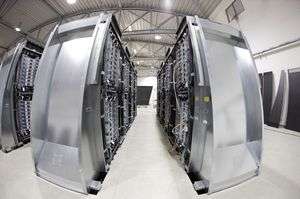
In Shanghai today, IBM unveiled plans for “Blue Cloud,” a series of cloud computing offerings that will allow corporate data centers to operate more like the Internet by enabling computing across a distributed, globally accessible fabric of resources, rather than on local machines or remote server farms.
Blue Cloud, built on IBM’s expertise in leading massive-scale computing initiatives, will be based on open standards and open source software supported by IBM software, systems technology and services. IBM announced today that its Blue Cloud development is supported by more than 200 IBM Internet-scale researchers worldwide and targets clients who want to explore the extreme scale of cloud computing infrastructures quickly and easily.
IBM is currently collaborating on cloud computing initiatives with select corporations, universities, Internet-based enterprises and government agencies, including the Vietnamese Ministry of Science and Technology, which this week announced a cloud computing project with IBM.
IBM’s first Blue Cloud offerings are expected to be available to customers in the spring of 2008, supporting systems with Power and x86 processors. At an event in Shanghai today, IBM demonstrated how cloud computing technologies, running on IBM BladeCenters with Power and x86 processors and Tivoli service management software, dynamically provision and allocate resources as workloads fluctuate for an application. IBM also expects to offer a System z “mainframe” cloud environment in 2008, taking advantage of very large number of virtual machines supported by System z. IBM also plans to offer a cloud environment based on highly dense rack clusters.
Blue Cloud – based on IBM’s Almaden Research Center cloud infrastructure -- will include Xen and PowerVM virtualized Linux operating system images and Hadoop parallel workload scheduling. Blue Cloud is supported by IBM Tivoli software that manages servers to ensure optimal performance based on demand. This includes software that is capable of instantly provisioning resources across multiple servers to provide users with a seamless experience that speeds performance and ensures reliability even under the most demanding situations. Tivoli monitoring checks the health of the provisioned servers and makes sure they meet service level agreements.
“Blue Cloud will help our customers quickly establish a cloud computing environment to test and prototype Web 2.0 applications within their enterprise environment,” said Rod Adkins, Senior Vice President, Development and Manufacturing for IBM Systems & Technology Group. “Over time, this approach could help IT managers dramatically reduce the complexities and costs of managing scale-out infrastructures whose demands fluctuate.”
Cloud computing is an emerging approach to shared infrastructure in which large pools of systems are linked together to provide IT services. The need for such environments is fueled by dramatic growth in connected devices, real-time data streams, and the adoption of service oriented architectures and Web 2.0 applications, such as mashups, open collaboration, social networking and mobile commerce. Continuing advances in the performance of digital components has resulted in a massive increase in the scale of IT environments, driving the need to manage them as a unified cloud.
IBM is developing Blue Cloud to help clients take advantage of cloud computing, including the ability of cloud applications to integrate with their existing IT infrastructure via SOA-based Web services. Blue Cloud will particularly focus on the breakthroughs required in IT management simplification to ensure security, privacy, reliability, as well as high utilization and efficiency. Cloud computing is targeted for existing workloads and emerging massively scalable, data intensive workloads.
On November 13th, IBM and the Vietnamese Ministry of Science and Technology (MoST) announced an open innovation pilot program that would run on a cloud computing infrastructure.
“The Vietnam Information for Science and Technology Advance Innovation Portal (VIP), created with IBM, will help provide Vietnamese communities and residents a dynamic, rich content source and foster innovation among the citizens, communities and government organizations,” said Dr. Tran Quoc Thang, Vice Minister of MoST. “VIP will be based on IBM’s enterprise Web 2.0 Innovation Factory solution and made available to universities and research institutions through the cloud infrastructure at IBM’s Almaden Research Center.”
The Origins of Blue Cloud
The Blue Cloud concept grew out of work IBM did in support of its own software innovators with an IBM innovation portal called the Technology Adoption Program. IBM developers can request computing resources be provisioned with software to test and conduct trials on their innovations with IBM employees through the program.
“By providing a dynamic infrastructure environment to IBM innovators over the past several months, we gained valuable experience with cloud computing technologies,” said Dr. Willy Chiu, Vice President of the IBM High Performance on Demand Solutions team. “Our customers have expressed strong interest in deploying a similar solution when we speak with them about how much time we can save innovators in obtaining the hardware and software resources they need to bring their solutions to market.”
IBM and Massive Scale Computing
Blue Cloud represents the next major advance in computing that IBM is uniquely qualified to lead because it builds off of IBM’s decades of experience developing and leading massive-scale computing. These include:
• Parallel Sysplex -- IBM System z mainframes that act together as a single system image, and combine data sharing and parallel computing to allow a cluster of systems to share a workload for high performance and high availability.
• IBM’s Deep Blue SP Cluster – The predecessor to today’s cluster technology, IBM’s legendary Deep Blue system is best known for defeating chess Grand Master Garry Kasparov more than ten years ago.
• Blue Gene – A network of massively powerful supercomputers that leverages open systems and massive numbers of very low cost, energy-efficient components. The next generation of Blue Gene -- Blue Gene/Q -- is expected to eventually achieve an operating speed of 10 to 30 PETAFLOPS, or thousands of trillions of floating point operations per second.
• Grid Computing – Based on an open set of standards and protocols, including key Service Oriented Architecture standards, IBM was an early advocate and contributor to commercial Grid computing which enables the virtualization of distributed computing and data resources such as processing, network bandwidth and storage capacity to create a single system image, granting users and applications seamless access to vast IT capabilities.
Source: IBM


