Direct evidence that bioclocks control chromosome coiling
There is a new twist on the question of how biological clocks work. In recent years, scientists have discovered that biological clocks help organize a dizzying array of biochemical processes in the body. Despite a number of hypotheses, exactly how the microscopic pacemakers in every cell in the body exert such a widespread influence has remained a mystery.
Now, a new study provides direct evidence that biological clocks can influence the activity of a large number of different genes in an ingenious fashion, simply by causing chromosomes to coil more tightly during the day and to relax at night.
“The idea that the whole genome is oscillating is really cool,” enthuses Vanderbilt Professor of Biological Sciences Carl Johnson, who headed the research that was published online Nov. 13 in the Proceedings of the National Academy of Sciences. “The fact that oscillations can act as a regulatory mechanism is telling us something important about how DNA works: It is something DNA jockeys really need to think about.”
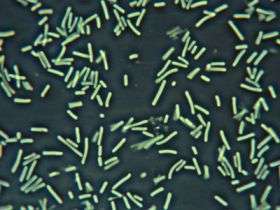
Johnson’s team, which consisted of Senior Lecturer Mark A Woelfle, Assistant Research Professor Yao Xu and graduate student Ximing Qin, performed the study with cyanobacteria (blue-green algae), the simplest organism known to possess a biological clock. The chromosomes in cyanobacteria are organized in circular molecules of DNA. In their relaxed state, they form a single loop. But, within the cell, they are usually “supercoiled” into a series of small helical loops. There are even two families of special enzymes, called gyrases and topoisomerases, whose function is coiling and uncoiling DNA.
The researchers focused on small, non-essential pieces of DNA in the cyanobacteria called plasmids that occur naturally in the cyanobacteria. Because a plasmid should behave in the same fashion as the larger and more unwieldy chromosome, the scientists consider it to be a good proxy of the behavior of the chromosome itself.
When the plasmid is relaxed, it is open and uncoiled and, when it is supercoiled, it is twisted into a smaller, more condensed state. So, the researchers used a standard method, called gel electrophoresis, to measure the extent of a plasmid’s supercoiling during different points in the day/night cycle.
The researchers found a distinct day/night cycle: The plasmid is smaller and more tightly wound during periods of light than they are during periods of darkness. They also found that this rhythmic condensation disappears when the cyanobacteria are kept in constant darkness.
“This is one of the first pieces of evidence that the biological clock exerts its effect on DNA structure through the coiling of the chromosome and that this, in turn, allows it to regulate all the genes in the organism,” says Woelfle.
Some cyanobacteria use their biological clocks to control two basic processes. During the day, they use photosynthesis to turn sunlight into chemical energy. During the night, they remove nitrogen from the atmosphere and incorporate it into a chemical compound that they can use to make proteins.
According to the Johnson lab’s “oscilloid model,” the genes that are involved in photosynthesis should be located in regions of the chromosome that are “turned on” by the tighter coiling in the DNA during the day and “turned off” during the night when the DNA is more relaxed. By the same token, the genes that are involved in nitrogen fixation should be located in regions of the chromosome that are “turned off” during the day when the DNA is tightly coiled and “turned on” during the night when it is more relaxed.
The researchers see no reason why the bioclocks in higher organisms, including humans, do not operate in a similar fashion. “This could be a universal theme that we are just starting to decipher,” says Woelfle.
The DNA in higher organisms is much larger than that in cyanobacteria and it is linear, not circular. Stretched end-to-end, the genome in a mammalian cell is about six feet long. In order to fit into a microscopic cell, the DNA must be tightly packed into a series of small coils, something like microscopic Slinkies.
Previous studies have shown that in higher organisms between 5 to 10 percent of genes in the genome are controlled by the bioclock, compared to 100 percent of genes in the cyanobacteria. In the case of the higher organisms, the bioclock’s control is likely to be local rather than the global situation in cyanobacteria.
With a circular chromosome (as in cyanobacteria), twisting it at any point affects the entire molecule. When you twist a linear chromosome at a certain point, however, the effect only extends for a limited distance in either direction because the ends are not connected. That fits neatly with the idea that the bioclock’s influence on linear chromosomes is limited to certain specific regions, regions where the specific genes that it regulates are located.
Source: Vanderbilt University


