New Drought-tolerant Plants Offer Hope for Warming World
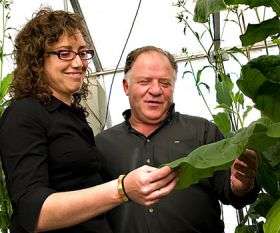
Genetically engineered crop plants that survive droughts and can grow with 70 percent less irrigation water have been developed by an international team led by researchers at the University of California, Davis. The discovery offers hope for global agriculture that is already grappling with limited and variable water supplies.
Research findings concerning the new drought-tolerant plants will be reported in the Nov. 26 online issue of the Proceedings of the National Academy of Sciences. In this study, tobacco plants were used as a research model.
The University of California has filed a patent application on this technology. The patent application is pending in the United States and in a number of foreign countries. The patent rights are covered by an exclusive arrangement between the University of California and Arcadia Biosciences, which has completed initial outdoor field trials with the drought-tolerance gene in tobacco.
"This is an exciting development because it opens the door, not only to producing plants that can survive periodic droughts, but also to reducing the amount of irrigation water routinely used to grow some of the world's most important food and fiber crops," said Eduardo Blumwald, a professor and Will W. Lester Endowed Chair in the Department of Plant Sciences.
Blumwald and UC Davis postdoctoral fellow Rosa Rivero collaborated on the work with researchers at RIKEN Plant Science Center in Japan; Biology Department Technion in Haifa, Israel; the University of Nevada, Reno; and Hebrew University of Jerusalem.
Drought and global agriculture
Droughts -- prolonged and abnormal shortages of water usually caused by lack of rainfall -- have been a fact of life throughout the ages. But scientists monitoring global climate change warn that warming trends will likely result in more frequent and widespread droughts, with serious implications for agriculture and worldwide food security.
The National Center for Atmospheric Research has reported that the percentage of the Earth's land area impacted by serious drought has more than doubled during the past three decades.
"Because climate change is altering rainfall patterns," Blumwald said, "agriculture must adapt by using strategies that range from changing traditional farming practices to developing genetically modified crops that can better tolerate drought and make more efficient use of irrigation water."
Plants' response to drought
Plants have developed their own biological strategies for coping with water shortages. In dry regions, annual plants avoid seasonal drought conditions by having relatively short life cycles and growing quickly during the wet season.
Furthermore, when water is scarce, plants are able to increase their chances of survival by minimizing water loss through their leaves, increasing root growth while reducing leaf growth, and dropping their older leaves.
Blumwald and colleagues decided to investigate whether it might be possible to enhance the plant's tolerance to drought by delaying the shedding of leaves triggered by water shortage. They conjectured that the loss of leaves was the result of programmed cell death, a process by which the plant triggers certain genes to initiate destruction of certain cells -- in this case, leaf cells.
Genetically introducing drought tolerance in tobacco
The researchers set out to suppress the programmed death of leaf cells and equip the plants to survive severe drought conditions.
Tobacco was chosen as an experimental plant because it is big, fast growing and a good model for many other crop plants. The researchers inserted into the tobacco plants a gene that interrupted the biochemical chain of events that normally leads to the loss of the plant's leaves during drought.
The genetically modified tobacco plants, and the non-modified plants in the experiment's control group, were all grown in a greenhouse under the same optimal conditions for 40 days. Water was then withheld from all of the plants for 15 days, simulating extreme drought conditions.
During the dry period, the non-modified tobacco plants in the control group wilted, lost their green pigment and progressively deteriorated. The genetically modified plants, however, remained green and did not display signs of severe deterioration.
At the end of the 15-day induced drought, all of the plants were re-watered for one week. The plants in the control group all died, but the genetically modified plants recovered and resumed normal growth, with little reduction in seed yield.
"Surprisingly, although the genetically modified tobacco plants went more than two weeks without being watered, they maintained relatively high water content and continued their photosynthetic activity throughout the dry period," said researcher Rosa Rivera.
"In short, with only minimal reduction in yield, these plants survived on just 30 percent of the normal irrigation water -- severe drought conditions that killed all of the plants in the control group," she said.
The research team is hopeful that similar results will be found in crop plants such as tomatoes, rice, wheat, canola and cotton. Upon completion of greenhouse experiments, the researchers plan to carry the research forward into field trials.
Source: UC Davis


