Buyer beware: Stressed plants won't survive shipping
It's a common springtime disappointment: you buy beautiful, flourishing potted plants from your local retailer, only to watch the once-healthy flowers wither and die shortly after you place them on your patio or porch. How do you know you are actually buying plants that will thrive after they leave the garden store? New research published in the October issue of HortTechnology will give consumers better odds for identifying and purchasing healthy, long-lasting annuals.
Dr. Terri W. Starman, Associate Professor in the Department of Horticultural Sciences at Texas A&M University, recently concluded a research study of potted annuals to determine the strongest survivors of "postharvest experiences" such as shipping and storage. Starman studied 21 vegetative annuals, popular garden plants marketed to consumers for use in landscaping and decorative containers. Most often sold in 10-inch pots, these showy annuals provide instant color for outdoor spaces and are consumer favorites for use in patio planters and window boxes.
On their way to consumers' homes, however, the annuals experience difficult shipping and storing conditions that have an impact on their survival. According to Starman, the annuals are usually packed in boxes at the growers and shipped long distances to retail outlets, where they often are left in the shipping boxes for several days. In the shipping boxes plants are subjected to high temperatures, low light, and increased exposure to ethylene gas.
Under these stressed conditions photosynthesis shuts down, causing plants to stretch, yellow, and "abscise", or shed foliage. Consumers pay the price when these stressed planets die soon after they are purchased from the retailer. The study showed that high-quality plants produced in the greenhouse may look healthy when they are removed from shipping boxes, but, within one week, the plants' quality declines, and by the end of three weeks most plants are unmarketable.
Starman and her team of researchers subjected 21 varieties of plants to zero, one, or two days of simulated shipping. "After the simulation, we tested plants for quality and counted flower abscission weekly for three weeks in a simulated retail environment. There were few decreases in flower number and quality directly after the simulated shipping, but decline symptoms became evident as time lapsed in the postharvest environment.", Starman said.
After two weeks postharvest, 12 of the 21 cultivars that were shipped for one or two days did not have a high enough quality rating to be considered marketable. Each species in this study had one or two postharvest decline symptoms common to all cultivars of that species. However, cultivars within species also varied in their postharvest decline symptoms and longevity.
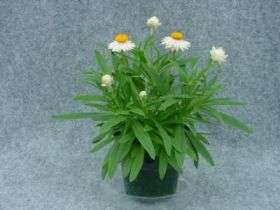
Five of the annuals tested still had flowers at termination of the experiment. Sturdy survivors included bracteantha (commonly known as paper daisy or strawflower) cultivars ‘Florabella White’, ‘Florabella Gold’, ‘Dreamtime Cream’, and ‘Sundaze Golden Yellow’, and ‘Cascadias Pink’ petunia.
Starman noted that more conducive environmental conditions, better care, and faster turnover in the retail market are needed to improve the shelf life of vegetative annuals. She added that better plant breeding efforts, production practices, and post-production treatments are needed if market turnover time can not be reduced. She hopes that studies like hers will help growers be better equipped to train retailers to care for plants, and will help retailers become more knowledgeable when designing optimal spaces for marketing potted garden plants.
"As an end result, production practices keeping postharvest longevity in mind will give consumers longer lasting products and will create more delighted, repeat customers.", added Starman.
Source: American Society for Horticultural Science


