Moss genome shows how plants invaded the land and learned to survive heat and drought
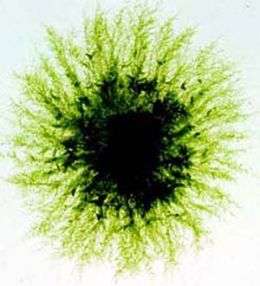
Some 400 million years ago, on a lifeless lakeshore lapped by waves, floating algae learned to survive in the open air and launched an invasion that transformed the Earth into a green paradise.
The secrets of these first steps onto land are now being revealed thanks to the sequencing of a modern descendent of these first land dwellers, a dainty moss called Physcomitrella patens that sprouts on recently exposed shorelines, quickly fruits, and then dies.
The sequencing of the moss genome was reported yesterday (Thursday, Dec. 13) in Science magazine's rapid online publication Science Express by an international team of scientists led by the Department of Energy's Joint Genome Institute in Walnut Creek, Calif. It will be printed in Science in January 2008.
"Land plants may have evolved in this transition zone where, as the water rises and falls, aquatic plants found themselves repeatedly but not continuously exposed to the air and had to come up with ways of protecting their seeds or spores from desiccation," said Joint Genome Institute project leader Jeffrey Boore, an adjunct associate professor of integrative biology at the University of California, Berkeley, and chief executive officer of Genome Project Solutions in Hercules, Calif.
Because of the key position of mosses in the evolution of green plants, the Physcomitrella genome may hold the key to the origin of such traits as desiccation tolerance, said Brent Mishler, a UC Berkeley professor of integrative biology who, with Ralph Quatrano of Washington University in St. Louis, Mo., originally proposed the moss genome project.
"One of the claims to fame of mosses is the ability to dry up completely and come back to life again," said Mishler, who is director of the University and Jepson Herbaria, two collections of pressed plants housed together along with research labs, libraries and archives at UC Berkeley.
"We have been looking for years at all levels, from the organism down to the molecular level, at how mosses do this, and the genome sequence will help speed that work."
From the Department of Energy's perspective, Boore said, discovering the genes involved in desiccation tolerance may help plant biologists incorporate the trait into other plants to improve their growth in arid conditions, allowing, for example, biofuel feedstocks to be grown on marginal land.
Physcomitrella is also a model organism that is easily manipulated for study of how many plant genes function.
"Physcomitrella is to flowering plants what the fruit fly is to humans; that is, in the same way that the fly and mouse have informed animal biology, the genome of this moss will advance our exploration of plant genes and their functions and utility," said Joint Genome Institute director Eddy Rubin.
Quatrano added that, "unlike vascular plant systems, we can target and delete specific moss genes to study their function in important crop processes, and replace them with genes from crop plants to allow us to study the evolution of gene function. In addition to the genome, extensive genomic tools are now available in Physcomitrella to study comparative gene function and evolution as related to bioenergy and other processes of importance to crops."
"The availability of the Physcomitrella genome is expected to create important new opportunities for understanding the molecular mechanisms involved in plant cell wall synthesis and assembly," according to Chris Somerville, UC Berkeley professor of plant and microbial biology and Director of the Energy Biosciences Institute (EBI), a partnership between UC Berkeley, Lawrence Berkeley National Laboratory, the University of Illinois at Urbana-Champaign and the global energy company BP.
"The ease with which genes can be experimentally modified in Physcomitrella will facilitate a wide range of studies of the cell wall, the principal component of terrestrial biomass," he said. "Additionally, the moss has fewer cell types than higher plants and has a much more rapid lifecycle, which also greatly facilitates experimental studies of cell walls. Thus, the completion of the genome is an important step forward in facilitating basic research concerning the development of cellulosic biofuels."
In the Science paper, researchers from more than 40 institutions report that the Physcomitrella genome contains just under 500 million nucleotides and possesses nearly 36,000 genes, which is about 50 percent more than are thought to be in the human genome. Physcomitrella is the first nonvascular land plant to be sequenced. Vascular plants lack specialized tissues (phloem or xylem) for circulating fluids, instead possessing specialized tissues for internal transport. They neither flower nor produce seeds, but reproduce via spores.
Mishler said that Physcomitrella is well-placed phylogenetically to fill in the large gap between the unicellular green alga Chlamydomonas, also sequenced by the Joint Genome Institute, and the flowering plants.
"Having the full Physcomitrella genome available to the public greatly advances bioinformatic comparisons and functional genomics in plants," said Mishler, who is part of a major effort within the Berkeley Natural History Museums - a consortium of six museums at UC Berkeley - to link the two. "This is a great example of how phylogenetics can integrate with functional and applied studies."
Mishler noted that the draft genome sequence is only the beginning. Plant scientists plan to meet regularly to assign specific functions to the newly identified genes based on experiments in the moss or by analogy with related genes in other organisms. This experimentation process is called annotation. The first so-called annotation jamboree was hosted in June 2006 by UC Berkeley and the Joint Genome Institute, and another is planned in Finland next year.
Source: University of California - Berkeley


