Utra-fast fibre lasers, dopey photons... what’s next?
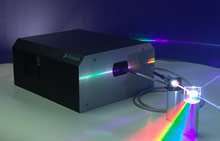
When lasers were developed in the 1960s, they were a solution looking for a problem to solve. Since then, they have become an essential tool in industries as diverse as nanotechnology and biomedicine. A new generation of ultra-fast fibre lasers being developed in Europe is creating even more uses for the beams of high-intensity light, while lowering production and maintenance costs and increasing efficiency.
To date, many commercial ultra-fast lasers – the kind that emit light in short pulses for laser machining or spectroscopy – have been based on solid-state technology using bulk optical components. However, they have several drawbacks, not least their large size and high production and maintenance costs – problems that can be solved by using optical fibre, rather than air, to carry the light.
“Fibre lasers could replace solid-state lasers for most uses, as well as open the door to new applications,” explains Mircea Guina, a researcher at the Tampere University of Technology in Finland.
Guina, the manager of the EU-funded Uranus project, foresees ultra-fast fibre lasers playing a key role in machining even smaller nanotechnology systems and in demonstrating practical new applications, such as optical coherence tomography, which is a 3D digital imaging technique used in medicine, among many other applications. “There are literally hundreds of uses,” he says.
The Uranus project proved fundamental in advancing the technology in Europe, allowing partner companies, such as laser manufacturers Fianium and Corelase, to take a leading role in the sector, and strengthening the position of Stratophase and NKT as suppliers of nonlinear crystals and photonic crystal fibres, respectively.
A giant leap in four years
“The technology and the sector today are incomparable to what they were like four years ago,” Guina notes.
Broadly, the Uranus researchers’ two main goals were to develop ultra-fast laser systems operating at different wavelengths, and to develop and test broadband fibre sources. They achieved both goals, and even surpassed their own expectations.
“Our research broke new ground – the number of research papers we published is proof of that,” Guina says. For the more technical readers, Uranus’ major achievements include the first-ever demonstration of a so-called ‘mode-locked’ laser which uses a special fibre, ytterbium-doped photonic bandgap (Yb-PBG), as both a medium and method of compensating beam dispersion. This discovery contributed to the development of the first ‘supercontinuum fibre laser’ being sold as a ready-to-go system by Fianium.
“The supercontinuum source can generate pulses at all wavelengths,” explains Oleg Okhotnikov, the coordinator of the Uranus project. “For example, in the case of medical imaging you can select the wavelength you need from the broadband spectrum to detect a specific type of chromophore attached to a cancer cell.”
Such new applications are not the only benefit of ultra-fast fibre lasers. Compared to solid-state lasers, fibre systems are more efficient, smaller and cheaper to produce.
“Fibre is more efficient than air at getting the light to its target so it needs less power to achieve the same results as solid-state systems. It is also more stable and robust,” Okhotnikov says.
Three times cheaper
Fibre systems are also considerably cheaper. Though many of the uses for them are new, fibre laser systems have been around for some time. Much of the technology involved was first developed during the 1990s when optical fibre started to be used for communications. Not only does that mean that fibre systems are well tried and tested, it also means that the components – such as the diode pumps that power the laser pulses – are relatively cheap.
“Production costs for a fibre laser are considerably less than for a solid-state system. A fibre 20-watt system operating at less than 15 picoseconds [one picosecond is one trillionth of a second] costs around €50,000 compared to the €150,000 price of a solid-state system,” Okhotnikov says.
It is therefore not surprising that increasing numbers of industries requiring lasers are switching to fibre – a boon for the project partners. In the last four years, UK-based Fianium has doubled turnover each year and quadrupled its number of full-time staff, while opening sales offices in Asia and the United States. Meanwhile, Corelase, another Uranus partner and developer of the X-lase high-powered fibre laser, was acquired by European application developer Rofin-Sinar in early 2007, due in part to the success of its work in the project.
Since the end of Uranus, the team have presented proposals for new projects in order to continue their research.
“We have come a long way in recent years, but there are still many more areas to explore,” Guina says.
Source: ICT Results


