Putting the brakes on bike thieves
December 21, 2007 Putting the brakes on bike thieves

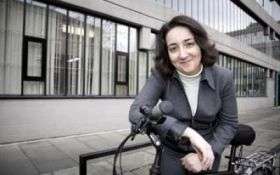
Ph.D. student Dima Damen. Credit: Simon & Simon photography

Technology being developed at the University of Leeds could put the brakes on bicycle thieves and may also be useful in flagging suspicious events in public places.

PhD student Dima Damen, from the University’s Faculty of Engineering has developed a computer system that detects individuals parking their bicycles and can automatically warn security staff if it appears that someone other than the owner retrieves the vehicle.

“It’s difficult to monitor CCTV cameras, as operators normally have a large number of screens to watch,” says Damen. “This often results in bicycle thefts being missed, even if they are happening right in front of the camera.”

Over 500,000 bicycles are stolen annually in the UK and only five per cent of these are returned to their owners. The increase in the number of people travelling by bicycle as an more eco-friendly method of transport has provided greater opportunities for bicycle thieves across the UK and while many local councils have located CCTV cameras above public bicycle racks, their effectiveness in deterring thieves is limited.

Currently at prototype stage, Damen’s system takes colour information from CCTV images when a bike is parked and stores it until the bike is retrieved. It then marries the stored information with the new image and where there are significant differences, it can raise an alert to CCTV operators. In initial tests using a camera located above a bike rack at the University of Leeds, eleven out of thirteen simulated thefts were detected.

“Without a system like this, the benefit of CCTV cameras is diminished by the difficulties of manual monitoring,” says Damen. “It’s a simple solution to an extremely widespread problem.”

Damen is now developing her technology to identify suspicious events in public places, such as the problem of baggage - especially in airports. “Someone intending to leave a suspicious package won’t leave it in full view of a CCTV camera, but may choose to leave it in a toilet or behind a pillar,” says Damen. “We think we can engineer this technology to recognise people who enter ‘flagged’ areas with a package or bag, but then leave without it, raising an alert for security staff. That’s my next challenge.”

Source: University of Leeds


print this article email this article download pdf blog this article bookmark this article     Stumble it Digg this share on Facebook retweet share on Reddit add to delicious
Rate this story - 4.3 /5 (16 votes)


December 21, 2007 all stories

Comments: 0

4.3 /5 (16 votes)
  • Stumble this up

  • Digg this

  • share this

  • hide
  • Related Stories

  • Seals like it hot
    created Sep 10, 2009 | popularity not rated yet | comments 0
  • China announces first panda from frozen sperm
    created Jul 24, 2009 | popularity not rated yet | comments 0
  • Recognition at last: Face recognition computers can see through your disguise
    created Jul 07, 2009 | popularity not rated yet | comments 0
  • Closing in on old ironstone pollution problem
    created Apr 23, 2009 | popularity not rated yet | comments 0
  • Britons growing more anxious, fueling downturn: study
    created Apr 14, 2009 | popularity not rated yet | comments 0


  • hide
  • Relevant PhysicsForums posts

  • Bread Board
    created 10 hours ago
  • Student team - building a satellite - want to join - problem:i'm a biotech student.
    created Nov 13, 2009
  • Motor Driver
    created Nov 13, 2009
  • Thermocouple Probe Selection
    created Nov 12, 2009
  • More from Physics Forums - General Engineering

Other News

Google digital book ambitions hinge on settlement (AP)

Google makes concessions on digital book deal (Update)

Technology / Internet

created 17 hours ago | popularity 5 / 5 (1) | comments 2

(AP) -- Google Inc. will loosen its control over millions of copyright-protected books that will be added to its digital library if a federal judge approves a revised legal settlement addressing the earlier ...


Aircraft that can see for themselves

Aircraft that can see for themselves (w/ Video)

Technology / Engineering

created 16 hours ago | popularity 5 / 5 (8) | comments 0

(PhysOrg.com) -- Australian researchers have made two important advances in the development of unmanned aircraft capable of seeing for themselves as they fly fast and low over dangerous terrain.


Road trains may be coming soon to Europe

Road trains may be coming soon to Europe (w/ Video)

Technology / Engineering

created Nov 13, 2009 | popularity 4.8 / 5 (11) | comments 17

(PhysOrg.com) -- Road trains linking vehicles together in a traveling convoy are planned for Europe. With only the lead vehicle being actively driven, the road trains would allow commuters to sleep, read a ...


A system of space solar power system (SSPS)

Japan eyes solar station in space as new energy source

Technology / Energy

created Nov 08, 2009 | popularity 4.8 / 5 (21) | comments 28

It may sound like a sci-fi vision, but Japan's space agency is dead serious: by 2030 it wants to collect solar power in space and zap it down to Earth, using laser beams or microwaves.


The collection and storage and retention of the household data makes it vulnerable to security breaches

New 'smart' electrical meters raise privacy issues

Technology / Energy

created Nov 06, 2009 | popularity 4.3 / 5 (11) | comments 12

The new "smart meters" utilities are installing in homes around the world to reduce energy use raise fresh privacy issues because of the wealth of information about consumer habits they reveal, experts said ...