Researchers create mathematical model of fruit fly eyes
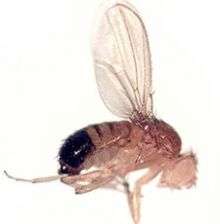
Many researchers have tried to create a mathematical model of how cells pack together to form tissue, but most models have many different complicated factors, and no model is universal.
Researchers at Northwestern University have now created a functional equation -- using only two parameters -- to show how cells pack together to create the eyes of Drosophila, better known as the fruit fly. They hope that the pared-down equation can be applied to different kinds of tissues, leading to advances in regenerative medicine.
Sascha Hilgenfeldt, associate professor of engineering sciences and applied mathematics and of mechanical engineering in the McCormick School of Engineering and Applied Science, teamed up with Richard W. Carthew, professor of biochemistry, molecular biology, and cell biology in the Weinberg College of Arts and Sciences, and Sinem Erisken, a McCormick undergraduate studying biomedical engineering, to create the model. Their work was published online Jan. 11 by the Proceedings of the National Academy of Sciences.
The interdisciplinary effort among geneticists, engineers and mathematicians began 18 months ago, when Hilgenfeldt, who specializes in foam, soft matter and fluid mechanics, teamed with Carthew, who has studied the biological features of fruit fly eyes.
Hilgenfeldt knew that when it comes to creating a model that shows what determines the shape of functional cells in tissues, the myriad factors -- including the bulk of the cell, what’s going on inside of the cell and how the cell forms -- make it very difficult to quantify.
“That’s a nightmare for quantitative scientists,” he said. “It’s extremely complicated.”
But the cells in a fruit fly’s eye act more like foam in that the structure of the cells depends only on the energy of their interfaces, or the surface where the cells touch. That energy is divided into two parts -- the energy from the stretching of the cells’ membranes and the energy of the “glue” (the adhesion molecules) that holds the neighboring cell membranes together. Hilgenfeldt took those two factors and created a quantitative model of cell geometries in the fruit fly retina. So instead of needing to know all the different cell factors to create the model, he just needed the two energy components to create the model.
“It’s one of the most quantitative models I’ve seen for a biological system,” Hilgenfeldt said. “For this system, mainly all you need to know is the interfacial energies and everything falls into place.”
Such a model helps researchers understand how the presence of the glue energy changes the shape of the eye and will help them study how those adhesion molecules develop and function during embryo development.
Further down the road, having these kinds of models could help scientists learn how to grow regenerative tissues. Hilgenfeldt also hopes to see how far he can take this model -- testing whether it will work in tissues that have much more variation in their cell patterns.
“It is very promising for quantitative science to be able to do something about these complex biological systems,” he said.
Though the undergraduate student who worked on the research has graduated, Hilgenfeldt said another undergraduate student will help continue the research through the Research Training Group (RTG) program in applied mathematics. The program emphasizes interdisciplinary research with teams composed of applied mathematicians, scientists and engineers. It is funded by a $2.1 million National Science Foundation grant.
“This is precisely what the grant is supposed to do,” Hilgenfeldt said. “Interdisciplinary work across all the stages of academic life -- from undergrad to faculty.”
Source: Northwestern University


