January 15, 2008 feature
Self-Paced Brain-Computer Interface Gets Closer to Reality
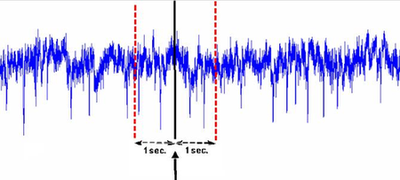
Using the human mind to control computers could lead to a wide range of applications, such as giving people with limited motion the ability to operate machines. However, translating thoughts into actions is a great challenge for researchers. How can a system determine which thoughts should be acted upon, and which thoughts are merely personal thoughts and therefore should be ignored by the system?
More importantly, asks Dr. Mehrdad Fatourechi, can the system provide the users with the ability to control a computer whenever they want? These are the questions that Fatourechi and other “self-paced” brain computer interface (BCI) researchers are trying to answer.
So far, no self-paced BCI system has performed well enough to be suitable for practical applications. But Fatourechi, along with Professors Dr. Rabab K. Ward and Dr. Gary E. Birch from the University of British Columbia, Canada, have recently made a significant improvement with the development of a self-paced, fully automated brain-computer interface. The group’s results are published in a recent issue of the Journal of Neural Engineering.
To test the abilities of a self-paced BCI, researchers often ask volunteers to perform a specific mental activity, such as to attempt to move their right index finger. The system then tries to detect the changes in the brain signals related to this mental activity (called neurological phenomenon) and map them into a control command for the device.
To researchers, confronting this problem means striving for a low false positive rate (when the system accidentally performs an action that the user did not intend) combined with a high true positive rate (when the system accurately identifies and acts upon a user’s mental commands). Researchers generally consider a true-positive rate of 70% to be acceptable for realistic situations. The false positive rate should ideally be zero, since a system that acts spontaneously would be very frustrating to users.
“The main reason [that it’s difficult to differentiate EEG signals] is that the signal-to-noise ratio of the neurological phenomena that the system tries to detect is very low,” Fatourechi told PhysOrg.com. “In other words, the level of noise is very high in a BCI system. Our system uses a rather complex feature classification method to achieve this task.”
Previously, the researchers had developed a self-paced BCI that could achieve a very low false positive rate (0.5%), but the true positive rate was also quite low, at 27.3%. The interface used three separate neurological phenomena: movement-related potentials, and changes in the power of Beta and Mu rhythms. All of these neurological phenomena are believed to be present in the EEG signals when a user attempts to perform a movement activity, so the researchers postulated that their simultaneous detection could improve the performance of the BCI systems.
This previous BCI system was considered to be semi-automated because some parts of the design were not automatic. In an attempt to improve the true-positive rate, the researchers changed the design to be fully automated in a few ways. First, they developed a “hybrid genetic algorithm” which automatically and simultaneously selects the parameters of different parts of the system that together yield the near-optimal performance. Also, the researchers employed more complex feature extraction and classification methods, and instead of using monopolar EEG signals, they used bipolar EEG signals to increase the number of the signals. The bipolar signals could also generate more discriminant features of different signals used for different thought processes.
“We believe the key factor is fully automating the structure of the system,” said Fatourechi. “Selecting a good ‘model’ for a BCI system is a delicate process, and if it is not done properly, it can decrease the performance significantly. By ‘fully’ automating the model selection process, we removed any subjectivity from the design of our BCI system and, as a result, improved the performance.”
Incorporating these improvements, the researchers’ new interface performed with a low false positive rate and “modest” true positive rate. On tests with four able-bodied subjects, the average false positive rate was 0.1%, and the average true positive rate was 56.2%, with one subject achieving rates as good as 0.0% and 64.2%, respectively. The researchers speculate that the ratio between the two rates is the best that has been reported for an EEG-based self-paced BCI system.
In the future, the researchers plan to study how to improve the distinct EEG pattern quality in the lower-performing subjects compared with the higher quality distinctions in the higher-performing subjects. They also want to explore methods to reduce interference caused by artifacts such as eye movements, which can significantly affect the movement-related potentials component of the system. Future studies will also investigate how individuals with limited motor abilities can work with the interface, as those individuals may benefit the most from brain-computer interfaces.
“With the low false positive rates that we have achieved, we believe implementing a self-paced EEG-based BCI system can be implemented for practical applications in the next couple of years,” said Fatourechi. “We have to further improve the performance during the presence of artifacts and carry out some online experiments using the proposed system.”
More information: Fatourechi, M, Ward, R K, and Birch, G E. “A self-paced brain-computer interface system with a low false positive rate.” J. Neural Eng. 5 (2008) 9-23.
Copyright 2007 PhysOrg.com.
All rights reserved. This material may not be published, broadcast, rewritten or redistributed in whole or part without the express written permission of PhysOrg.com.


