When mice choose mates, experience counts
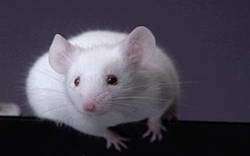
Choosing a mate is a big decision. And, at least for mice, it's one that is best made with input from one's peers. In a series of experiments designed help scientists understand the brain chemicals that guide mate selection, Pfaff and his colleagues exposed female mice to odors of either a male mouse alone or a male mouse with a female. The females consistently preferred the scent of males linked to other females.
"Our data suggest that female mice may use, or even copy, the interests of other females based on olfactory cues," says Pfaff, who is head of the Laboratory of Neurobiology and Behavior. "It could also be seen as a female trusting the mate choice of another female."
That one female's choice of mate could influence the choices of other females is well documented in birds and fish, but had not been documented for any mammalian species. Pfaff says that the female mice's mate preference was so strong that they even preferred the combined male/female scent when it was tainted with the scent of infectious parasites, opting for that over the scent of a healthy lone male.
"Male odors can provide female mice with information on their quality, condition, health and suitability as a potential mate," says Pfaff. "This type of 'public information' uses cues inadvertently provided by an individual, such as odor, which others observe use to make decisions such as mate choice, food location, or presence of danger. Specifically in birds and fish, 'public information' has been shown play a role in when and what to eat and with whom to mate with, but its use in mate choice has not been seen in mammals."
Pfaff, who is interested in how brain chemicals affect behavior, says the decisions made by the female mice hinge on the presence of oxytocin, a neurotransmitter associated, in humans, with bonding, trust and sexual attraction. When the gene for oxytocin was missing, female mice no longer preferentially chose male odors paired with other female odors, and they did not avoid the odors of infected males, though other tests showed that their olfactory system was perfectly intact.
"Our research shows that the oxytocin gene is involved in the processing and integration of inadvertent social information used in directing mate choice of female mice," says Pfaff. "Of course, we don't know if it works the same way in humans. But many have speculated that social influences do play a role in how we choose our friends and partners."
Source: Rockefeller University


