Whirligig beetle gets rock 'n' roll legendary name
January 28, 2008
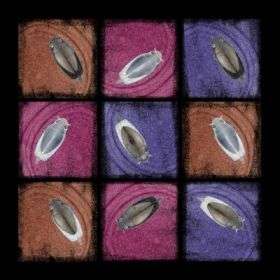
Pigment inkjet print titled "Whirligig" created by Arizona State University research professional Charles J. Kazilek. The original art work was presented Jan. 25 to Barbara Orbison by ASU entomologist Quentin Wheeler to mark the naming of an unusual new species of whirligig beetle from India Orectochilus orbisonorum in honor of the late rock 'n' roll legend Roy Orbison and his widow. Image courtesy of Arizona State University/Artist: Charles J. Kazilek
An unusual new species of whirligig beetle from India is being named Orectochilus orbisonorum in honor of the late rock ‘n’ roll legend Roy Orbison and his widow Barbara.
Arizona State University entomologist Quentin Wheeler announced the description and discovery of the beetle species Jan. 25 during a Roy Orbison Tribute Concert, part of a weekend of tribute events hosted by ASU’s Center for Film, Media and Popular Culture and the Tempe Center for the Arts.
Barbara Orbison attended the concert, as well as hundreds of fans, Orbison’s sons Wesley and Roy Kelton Orbison Jr., and songwriters and filmmakers who worked with the legendary musician.
“I have never seen an honor like that,” Barbara Orbison said in expressing her appreciation for the species naming.
To mark the occasion, an original work of art – a pigment inkjet print titled “Whirligig” – was presented to Orbison during the concert.
“It’s a token of admiration for Roy’s body of work and all you do to keep his music alive,” said Wheeler in presenting the art work to Orbison. Wheeler is director of the International Institute for Species Exploration at Arizona State University where he also is a professor in the School of Life Sciences and vice president and dean of the College of Liberal Arts and Sciences.
The art, a painting with pixels on cotton water color paper, features nine images of a whirligig beetle in Andy Warhol style. It was created by Charles J. Kazilek, a senior research professional in ASU’s School of Life Sciences where he hosts a popular children’s podcast “Ask a Biologist.” Kazilek also has a degree from ASU’s Herberger College of the Arts.
In describing the work, Wheeler quipped: “The style of the print is Warhol meets Carl Linnaeus,” making a reference to the father of taxonomy and the practice and science of classification.
Wheeler co-authored the research behind the discovery of the new species Orectochilus orbisonorum with two other scientists: Kelly Miller of the University of New Mexico and Paolo Mazzoldi of Brescia, Italy.
In 2005, Wheeler and Miller made news with the discovery of 65 new species of slime-mold beetle of the genus Agathidium, with one named after Darth Vader and others named for President George W. Bush, Vice President Dick Cheney and former Secretary of Defense Donald Rumsfeld.
A scientific paper describing the new species of Gyrinidae (Coleoptera), Orectochilus orbisonorum, sp.nov, was accepted for publication by “Zootaxa,” an international journal for animal taxonomists. According to the trio of researchers, the new species “is unique among Indian Gyrinidae and Orectochilus Lacordaire, in general, since the ventral surfaces are white as the result of clear areas of cuticle allowing internal tissues to be visible.”
Source: Arizona State University
-
Beetle explorers name new species for Roosevelt
Mar 22, 2011 |
not rated yet |
0
-
Entomologists name 'diving beetle' for Comedy Central's Stephen Colbert
May 06, 2009 |
5 / 5 (6) |
6
-
Patterns of antibiotic-resistant bacteria found in Galapagos reptiles
Jan 23, 2012 |
not rated yet |
0
-
Insects top latest inventory of newly discovered species
Jan 18, 2012 |
5 / 5 (1) |
0
-
Scientists list top 10 new species
May 23, 2011 |
4.8 / 5 (4) |
0
-
Engineers build first sub-10-nm carbon nanotube transistor
Feb 01, 2012 |
4.9 / 5 (33) |
30
-
Something old, something new: Evolution and the structural divergence of duplicate genes
Jan 31, 2012 |
4.6 / 5 (7) |
1
-
The hidden nanoworld of ice crystals: Revealing the dynamic behavior of quasi-liquid layers
Jan 30, 2012 |
5 / 5 (4) |
1
-
Stock market network reveals investor clustering
Jan 27, 2012 |
3.9 / 5 (23) |
8
-
Of microchemistry and molecules: Electronic microfluidic device synthesizes biocompatible probes
Jan 26, 2012 |
5 / 5 (2) |
0
More news stories
A mitosis mystery solved: How chromosomes align perfectly in a dividing cell
Although the process of mitotic cell division has been studied intensely for more than 50 years, Whitehead Institute researchers have only now solved the mystery of how cells correctly align their chromosomes during symmetric ...
12 hours ago |
4.3 / 5 (18) |
0
|
Researchers find extensive RNA editing in human transcriptome
In a new study published online in Nature Biotechnology, researchers from BGI, the world's largest genomics organization, reported the evidence of extensive RNA editing in a human cell line by analysis of RNA-seq data, demons ...
12 hours ago |
5 / 5 (4) |
0
|
The proteins ensuring genome protection
Researchers from the University of Geneva (UNIGE), Switzerland, have discovered the crucial role of two proteins in developing a cell 'anti-enzyme shield'. This protection system, which operates at the level of molecular ...
12 hours ago |
5 / 5 (3) |
0
|
Entire genome of extinct human decoded from fossil
(PhysOrg.com) -- In 2010, Svante Pääbo and his colleagues presented a draft version of the genome from a small fragment of a human finger bone discovered in Denisova Cave in southern Siberia. The ...
Feb 07, 2012 |
4.7 / 5 (60) |
51
|
Why are there so few fish in the Earth's oceans?
(PhysOrg.com) -- A Stony Brook University researcher has found that, contrary to popular belief, there are not plenty of fish in the sea.
Feb 08, 2012 |
4.3 / 5 (19) |
27
|
Scientists discover molecular secrets of 2,000-year-old Chinese herbal remedy
For roughly two thousand years, Chinese herbalists have treated Malaria using a root extract, commonly known as Chang Shan, from a type of hydrangea that grows in Tibet and Nepal. More recent studies suggest that halofuginone, ...
New method to examine batteries -- MRI from the inside
There is an ever-increasing need for advanced batteries for portable electronics, such as phones, cameras, and music players, but also to power electric vehicles and to facilitate the distribution and storage of energy derived ...
Google might launch Drive for cloud storage soon
(PhysOrg.com) -- Google's next big move, according to the Wall Street Journal, is a cloud storage service called Drive. Hardly first to the plate, Google is simply catching up to introducing its cloud reposi ...
Lab study raises questions over nano-particle impact
Tests involving chickens have raised questions about the impact on health from engineered nano-particles, the ultra-fine grains commonly used in drugs and processed foods, scientists said on Sunday.
Starve a virus, feed a cure? Findings show how some cells protect themselves against HIV
A protein that protects some of our immune cells from the most common and virulent form of HIV works by starving the virus of the molecular building blocks that it needs to replicate, according to research published online ...
Iran blocks email, restricts net access: reports
Iran has further restricted access to the Internet and blocked popular email services for the past few days, in a move a top lawmaker said could "cost the regime dearly," media reports said on Sunday.