Structure of chocolate unravelled by synchrotron radiation
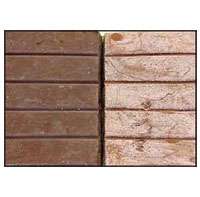
Think about a piece of chocolate. Imagine it melting in your mouth. The sensation is delicious. Now think of the same image, but this time the chocolate is covered by a white film on its surface. This white film is produced when chocolate is poorly crystallised or when it is stored under the wrong conditions. We ’eat’ also with our eyes, so such bad-looking chocolate seems less nice to the palate. Here is where scientists come into the picture. Researchers from The Netherlands working at the ESRF try to avoid this white layer, called fat bloom, by studying the structure of chocolate. Their aim is to optimise the pleasure of eating it. They publish this week in the Journal of Physical Chemistry B the structure of a component of cocoa butter and also the crystal structure of the most common form of cocoa butter in chocolate, a result that is of great importance for chocolate production. The ESRF synchrotron light was essential for this research.
There is a lot of science in the process of making chocolate. Dark and bitter sweet chocolate contain from 31 to 38% of cocoa-butter, 16 to 32% of cocoa powder and 30 to 50% of sugar. Cocoa butter determines the physical properties of the chocolate. It has a high degree of crystallinity and may crystallise in six different crystalline forms in the course of the production process. This process includes tempering, which consists of repeatedly heating the chocolate to a specific temperature and then cooling it down. It aims to bring the cocoa butter in one of the most stable crystal forms. The different crystalline phases are numbered from phase I to the most stable phase VI. The lower-numbered phases are unstable and do not give a good product, but manufacturers nowadays manage to set the chocolate in phase V. Nevertheless, even this chocolate phase can suffer from phase transition during storage, resulting in fat bloom. This explains the importance of crystallising the chocolate properly.
A team of scientists from the University of Amsterdam, with help of the ESRF, has made a major step forward by identifying for the first time the crystal structure of one of the three main triglycerides that make up chocolate butter. The triglyceride, called SOS, is a cis-mono-unsaturated type and represents one quarter of the chocolate butter. This breakthrough helps in better understanding the melting behaviour of cocoa butter and better controlling the production process. According to Dr. René Peschar, first author of the paper, “This work is expected to be highly relevant to confectionery research and industry and the first step to a better understanding of the mechanism of the fat bloom phenomenon at the molecular level.”
The researchers used the synchrotron light to collect data from which they determined this structure using the X-ray powder diffraction technique. They also stored completely molten cocoa butter at room temperature (around 22°C) for several weeks to get the phase V. Then they studied it at the ESRF with the same technique and managed to construct a crystal structure model of this cocoa butter phase V. “It is impossible to get these results with laboratory data; you really need a synchrotron facility because of its superior data quality”, explains Dr. Peschar, from the University of Amsterdam.
The chocolate research based on data measured at the ESRF has also had impact on industry. The Dutch machine manufacturing company ’Machinefabriek P.M. Duyvis’ acquired a patent concerning an improved method of making chocolate that is based on the results of experiments carried out by the Dutch researchers at the ESRF over the last few years. The company built a prototype, tested and fine-tuned it together with the University of Amsterdam and a major European chocolate producer. The company is situated in the middle of the "Zaanstreek", a region hallmarked by a huge diversity of foodstuff manufacturers and processing more than 20% of the world’s cocoa bean crop.
Source: European Synchrotron Radiation Facility


