Conservation strategies must shift with global environmental change, says CU-Boulder study
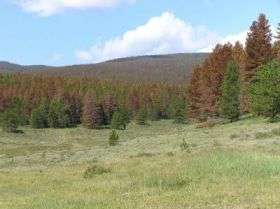
Sustaining and enhancing altered ecosystems has become the new mantra for conservation and restoration managers as ecosystems continue to change in response to global warming and other environmental changes, says a new study led by the University of Colorado at Boulder.
Professor Timothy Seastedt of CU-Boulder's ecology and evolutionary biology department said atmospheric pollution, climate change, exotic species invasions, extinctions and land fragmentation have altered virtually every ecosystem on the planet. Managers and biologists should be nurturing so-called "novel ecosystems" -- thriving combinations of plants, animals and habitat that have never occurred together before -- and developing new conservation strategies for them, he said.
"The reality is that enormous environmental changes are happening very rapidly, and in many cases, there is very little we can do about them," said Seastedt. "We think the trick now is to accept, preserve and enhance these novel ecosystems and do what we can to shield them from further changes."
A paper on the subject was published online Jan. 31 in Frontiers in Ecology and the Environment, published by the Ecological Society of America. The paper was authored by Seastedt, Richard Hobbs of Murdoch University in Australia and Katharine N. Suding of the University of California, Irvine.
Current management practices often involve trying to fix only one aspect of an ecosystem, like eradicating an invasive species, according to the authors. But in many cases, such action does little to improve the ecosystem's overall health. Invasive plant species that have been removed, for example, are frequently replaced by other invasive species that quickly colonize the ecological "vacuum."
Instead, biologists and managers need to work with new approaches that focus on desired outcomes, emphasizing genetic and species diversity, said Seastedt, also a fellow at CU-Boulder's Institute of Arctic and Alpine Research. Such projects could include "reassembling" forest ecosystems in the West devastated by bark beetles, replanting them with bug-resistant trees and introducing vegetation that absorbs large amounts of carbon dioxide and filters nutrient-enriched water, he said.
Seastedt likened today's land managers to harried triage doctors. "They are so busy trying to rectify past problems they have a hard time dealing with current problems. We think it is time for managers and ecologists to get in the trenches together and act quickly to manage some of these ecosystems in desirable directions," he said.
Recent successes include public land in Boulder County that is home to a swath of endangered tall grass prairie, he said. There, land managers use a spring grazing regime, allowing cattle to trample and remove standing dead vegetation, doing the job natural fires once did. After the cattle are moved for the year, warm season grasses emerge and fill into a lush stand of tall grass prairie, he said.
A second Boulder County example is a reclaimed gravel pit where managers added low-budget topsoil and a mix of nine native grass species with widely varying moisture tolerances, he said. "The grassland that has emerged under unusually dry conditions was not the one that existed prior to the gravel operations," said Seastedt. "But it is now dominated by a mix of native plant species that thrives in dry soil and anchors an area almost devoid of invasive species.
The team looked at management studies from the past 12 years for their research effort. "In managing novel ecosystems, the point is not to think outside the box, but to recognize that the box itself has moved, and in the 21st century, will continue to move increasingly rapidly," the authors wrote.
Source: University of Colorado at Boulder


