Toshiba develops the world's fastest speed embedded DRAM technology
February 6, 2008 Toshiba develops the world's fastest speed embedded DRAM technology

Toshiba Corporation today announced that it has realized the world's fastest circuit technology for embedded DRAM for System LSI, achieving a speed of 833MHz at 32Mb density. The technology will be applied to graphic processing LSI. The technology was today introduced at the ISSCC (International Solid State Circuits Conference), held at San Francisco CA from February 3rd.

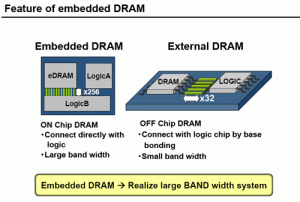
Embedded DRAM are applied to systems on chips for graphic application, as they can read larger data amounts at higher speeds than external memory. As video images achieve higher levels of definition, higher processing speeds of larger densities are required.

To realize high speed operation, Toshiba applied a "pseudo two port system," a technology that virtually divides the overall memory into two and then reads and writes data in parallel and alternately.

By replacing conventional serial read and write system with the new parallel technology, and optimizing such circuits as the command structure, Toshiba achieved the world's highest level of embedded DRAM performance ad 32Mb, a density actually applicable to products.

System LSI with embedded DRAM memory will find application in next generation high-end digital consumer products, game applications, mobile phones, projectors and other image-related applications that require high speed transfer of large volumes of data. Toshiba plans to apply this technology to its leading edge 65nm system LSI process, and to meet market demand for advanced graphic applications through the early launch of SoC integrating the new embedded DRAM.

Source: Toshiba


print this article email this article download pdf blog this article bookmark this article     Stumble it Digg this share on Facebook retweet share on Reddit add to delicious
Rate this story - 3.5 /5 (4 votes)


February 6, 2008 all stories

Comments: 0

3.5 /5 (4 votes)
  • Stumble this up

  • Digg this

  • share this

  • hide
  • Related Stories


  • hide
  • Relevant PhysicsForums posts

  • electromagnet not working
    created 2 hours ago
  • Starter for small motor
    created 3 hours ago
  • Does the stuff you solder with have lead in it
    created 7 hours ago
  • CCD Camera Technology
    created 8 hours ago
  • More from Physics Forums - Electrical Engineering

Other News

Hackers leak e-mails, stoke climate debate

Technology / Internet

created 9 hours ago | popularity 4.5 / 5 (15) | comments 8

(AP) -- Computer hackers have broken into a server at a well-respected climate change research center in Britain and posted hundreds of private e-mails and documents online - stoking debate over whether some scientists have ...


plug-in hybrid electric vehicle

Pulling the plug on hybrid myths

Technology / Energy

created Nov 19, 2009 | popularity 3.8 / 5 (12) | comments 17

(PhysOrg.com) -- Whether you call them myths, urban legends, fables or old wives' tales, there's a lot of misinformation out there about plug-in electric hybrid vehicles. These vehicles, abbreviated PHEVs, ...


UK police make 2 Trojan computer virus arrests

Technology / Internet

created Nov 18, 2009 | popularity 5 / 5 (1) | comments 10

(AP) -- A couple suspected of helping spread some of the Internet's most aggressive computer viruses has been arrested in the English city of Manchester, police said Wednesday.


A sign marks the entrance to IBM Corporate Headquarters

IBM makes Big Blue cloud

Technology / Software

created Nov 16, 2009 | popularity 2.9 / 5 (8) | comments 8

IBM on Monday announced it has created the world's largest business computing "cloud" capable of holding an amount of digital data on a par with 250 billion iTunes songs.


Google SPDY

Google's SPDY will speed up downloads

Technology / Internet

created Nov 16, 2009 | popularity 4.4 / 5 (16) | comments 7

(PhysOrg.com) -- As part of its effort to speed up the Web, Google is experimenting with SPDY, a new application layer protocol, that it hopes will speed up the conversation between browsers and Web servers ...