Avian culling doesn't stop bird flu
March 27, 2006 Bird Flu

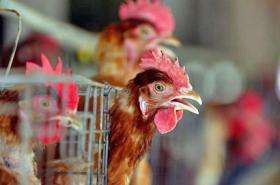
At least 29 nations have reported initial cases of avian influenza during the past seven weeks, reflecting the ineffectiveness of bird culling.

The viral disease has been newly reported in Nigeria, Israel, India, Sweden and elsewhere, with scientists in the United States estimating bird flu is likely to arrive in North America this year.

"We expected it to move, but not any of us thought it would move quite like this," said Dr. David Nabarro, the U.N. coordinator on bird flu efforts, told The Los Angeles Times.

Researchers initially thought culling millions of chickens, ducks and other birds would contain or even eradicate the virus. It has not.

The virus has so far infected 186 humans, causing 105 deaths, according to the World Health Organization. The fear is the virus will mutate, becoming easily spread between humans and creating a pandemic that potentially could kill millions of people.

"Each morning I sit down at the computer ... there's another country, another outbreak or another human case," Nancy Cox, chief of the influenza branch at the U.S. Centers for Disease Control and Prevention, told the Los Angeles Times. "It keeps us breathless," she said.

Copyright 2006 by United Press International


print this article email this article download pdf blog this article bookmark this article     Stumble it Digg this share on Facebook retweet share on Reddit add to delicious
Rate this story - 4.2 /5 (13 votes)


March 27, 2006 all stories

Comments: 0

4.2 /5 (13 votes)
  • Stumble this up

  • Digg this

  • share this

  • hide
  • Related Stories

  • Computer simulation captures immune response to flu
    created May 18, 2009 | popularity not rated yet | comments 0
  • As swine flu spreads, who should get Tamiflu?
    created May 12, 2009 | popularity not rated yet | comments 0
  • WHO raises its pandemic alert level on swine flu
    created Apr 27, 2009 | popularity not rated yet | comments 0
  • Swine flu prompts EU warning on travel to US
    created Apr 27, 2009 | popularity not rated yet | comments 0
  • Scramble to stop swine flu spread among travelers
    created Apr 27, 2009 | popularity not rated yet | comments 0


Other News

Growth in secular attitudes leaves Americans room for belief in God

Other Sciences / Social Sciences

created Oct 31, 2009 | popularity 4 / 5 (6) | comments 116

(PhysOrg.com) -- The nature of the American religious experience is changing as a rising number of people report having no formal religious affiliation, even though the number of Americans who say they pray is increasing, ...


Forest clearances sealed ancient civilisation's downfall

Forest clearances sealed ancient civilisation's downfall

Other Sciences / Archaeology & Fossils

created Nov 02, 2009 | popularity 4.9 / 5 (8) | comments 5

(PhysOrg.com) -- An ancient South American civilisation which disappeared around 1,500 years ago helped to cause its own demise by damaging the fragile ecosystem that held it in place, a study has found. ...


Oscar Pistorius

New study further disputes notion that amputee runners gain advantage from protheses

Other Sciences / Other

created Nov 04, 2009 | popularity 5 / 5 (4) | comments 5

A study by six researchers, including a University of Colorado at Boulder associate professor and his former doctoral student, shows that amputees who use running-specific prosthetic legs have no performance ...


New theory on fairness in economics targets CEO pay

Other Sciences / Economics

created Nov 03, 2009 | popularity 4.3 / 5 (11) | comments 2

(PhysOrg.com) -- Chief executives in 35 of the top Fortune 500 companies were overpaid by about 129 times their "ideal salaries" in 2008, according to a new type of theoretical analysis proposed by a Purdue University researcher ...


Racial segregation key factor in subprime lending

Other Sciences / Economics

created Nov 06, 2009 | popularity 3 / 5 (2) | comments 2

(PhysOrg.com) -- New study examines impact of segregation on the prevalence of high-cost loans in U.S. metro areas. Subprime loans disproportionately located in segregated areas.