PARP-1 rules! Scientists find how a protein binds to genes and regulates human genome
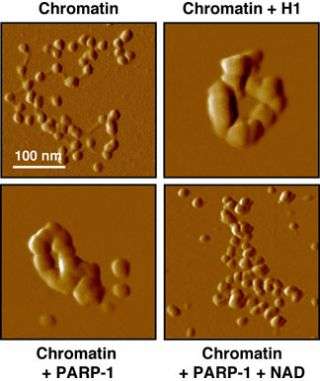
Out of chaos, control: Cornell University molecular biologists have discovered how a protein called PARP-1 binds to genes and regulates their expression across the human genome. Knowing where PARP-1 is located and how it works may allow scientists to target this protein while battling common human diseases. Their research is in a study published today in the journal Science.
"This finding was unexpected -- especially since it entails a broad distribution of PARP-1 across the human genome and a strong correlation of the protein binding with genes being turned on," said W. Lee Kraus, Cornell associate professor in molecular biology and the corresponding author in the published study. Kraus has a dual appointment at Cornell's Weill Medical College in New York City. "Our research won't necessarily find cures for human diseases, but it provides molecular insight into the regulation of gene expression that will gives us clues where to look next."
Kraus explains that PARP-1 and another genome-binding protein called histone H1 compete for binding to gene "promoters" (the on-off switches for genes) and, as such, act as part of a control panel for the human genome. H1 puts genes in an "off" position and PARP-1 turns them "on." The new study, said Kraus, shows that for a surprising number genes, the PARP-1 protein is present and histone H1 is not, helping to keep those genes turned on.
When human cells are exposed to physiological signals, such as hormones, or to stress signals, such as metabolic shock or DNA damage caused by agents like ultra-violet (UV) light, the cells take action. One of the cellular responses is the production of NAD (nicotinamide adenine dinucleotide), a metabolic communication signal. NAD promotes the removal of PARP from the genome and alters PARP-1's ability to keep genes on, the scientists have found.
Knowing where this component of the genome's control panel -- the PARP-1 protein -- is located, scientists can better understand the effects of synthetic chemical inhibitors of PARP-1 activity, which are being explored for the treatment of human diseases including stroke, heart disease and cancer. Thus, conceivably, when a patient is having stroke, it may one day be possible to use PARP-1 inhibitors as part of stroke therapy, or one day play a role in targeting cancer, says Kraus.
"Think of PARP-1 as a key regulator of gene expression in response to normal signals and harmful stresses," said Kraus. "If you could control most of the traffic lights in a city's street grid with one hand, this is analogous to controlling gene expression across the genome with PARP-1. Under really adverse conditions, you can set all the lights to stop."
Source: Cornell University


