What gives us fingertip dexterity?
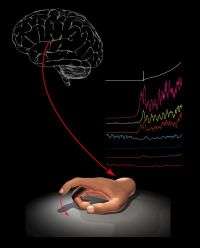
Quickly moving your fingertips to tap or press a surface is essential for everyday life to, say, pick up small objects, use a BlackBerry or an iPhone. But researchers at the University of Southern California say that this seemingly trivial action is the result of a complex neuro-motor-mechanical process orchestrated with precision timing by the brain, nervous system and muscles of the hand.
USC Viterbi School of Engineering biomedical engineer Francisco Valero-Cuevas is working to understand the biological, neurological and mechanical features of the human hand that enable dexterous manipulation and makes it possible for a person to grasp and crack an egg, fasten a button, or fumble with a cell phone to answer a call.
“When you look at the hand, you think, ‘five fingers, what could be more straightforward?’ ” Valero-Cuevas said, “but really we don’t understand well what a hand is bio-mechanically, how it is controlled neurologically, how disease impairs it, and how treatment can best restore its function. It is difficult to know how each of its 30-plus muscles contributes to everyday functions like using a cell phone or performing the many finger tasks it takes to dress yourself.”
In a study published online in the Feb. 6, 2008 issue of The Journal of Neuroscience, titled “Neural Control Of Motion-to-Force Transitions with the Fingertip,” Valero-Cuevas and co-author Madhusudhan Venkadesan of Cornell University’s Department of Mathematics asked volunteers to tap and push against a surface with their forefinger while the researchers recorded the fingertip force and electrical activity in all of the muscles of the hand.
These researchers, in a first-of-a-kind experiment, recorded 3D fingertip force plus the complete muscle coordination pattern simultaneously using intramuscular electromyograms from all seven muscles of the index finger. Subjects were asked to produce a downward tapping motion, followed by a well-directed vertical fingertip force against a rigid surface. The researchers found that the muscle coordination pattern clearly switched from that for motion to that for force (~65 ms) before contact. Venkadesan’s mathematical modeling and analysis revealed that the underlying neural control also switched between mutually incompatible strategies in a time-critical manner.
“We think that the human nervous system employs a surprisingly time-critical and neurally demanding strategy for this common and seemingly trivial task of tapping and then pushing accurately, which is a necessary component of dexterous manipulation,” said Valero-Cuevas, who holds a joint appointment in the USC School of Dentistry’s division of Biokinesiology and Physical Therapy.
“Our data suggest that specialized neural circuitry may have evolved for the hand because of the time-critical neural control that is necessary for executing the abrupt transition from motion (tap) to static force (push),” he said. “In the tap-push exercise, we found that the brain must be switching from the tap command to the push command while the fingertip is still in motion. Neurophysiological limitations prevent an instantaneous or perfect switch, so we speculate that there must be specialized circuits and strategies that allow people to do so effectively.
“If the transition between motor commands is not well timed and executed, your initial forces will be misdirected and you simply won’t be able to pick up an egg, a wine glass or a small bead quickly,” he said.
The findings begin to explain why it takes young children years to develop fine finger muscle coordination and skills such as precision pinching or manipulation, and why fine finger manipulation is so vulnerable to neurological diseases and aging, Valero-Cuevas said.
But perhaps even more importantly, he said, the findings suggest a functional explanation for an important evolutionary feature of the human brain: its disproportionately large sensory and motor centers associated with hand function.
“If, indeed, the nervous system faced evolutionary pressures to be able to anticipate and precisely control routine tasks like rapid precision pinch, the cortical structures for sensorimotor integration for finger function would probably need to be pretty well developed in the brain,” Valero-Cuevas said.
“That would give us the neural circuits needed for careful timing of motor actions and fine control of finger muscles,” he said. “Thus, our work begins to propose some functional justifications for the evolution of specialized brain areas controlling dexterous manipulation of the fingertips in humans.”
By understanding the neuromuscular principles behind dexterous manipulation, Valero-Cuevas hopes to help those who have lost the use of their hands by guiding rehabilitation and helping to develop the next generation of prosthetics. In addition, the work will allow industry to build machines that have versatility comparable to that of the human hand.
“As an analogy, I ask people to imagine going through life wearing winter gloves,” he said. “If you can grasp things in only the grossest of ways without fine manipulation, life is pretty difficult. Yet millions of people worldwide go through life without the full use of their hands. Diseases and aging processes that affect the hand function tend to disproportionately degrade the quality of life, and we want to reverse that.”
Source: University of Southern California


