Team uncovers Egypt's earliest agricultural settlement
Archaeologists from UCLA and the University of Groningen (RUG) in the Netherlands have found the earliest evidence ever discovered of an ancient Egyptian agricultural settlement, including farmed grains, remains of domesticated animals, pits for cooking and even floors for what appear to be dwellings, the National Geographic Society announced today.
The findings, which were unearthed in 2006 and are still being analyzed, also suggest possible trade links with the Red Sea, including a thoroughfare from Mesopotamia, which is known to have practiced agriculture 2,000 years before ancient Egypt.
"By the time of the Pharaohs, everything in ancient Egypt centered around agriculture," said Willeke Wendrich, the excavation's co-director and an associate professor of Near Eastern languages and cultures at UCLA. "What we've found here is a window into the development of agriculture some 2,000 years earlier. We hope this work will help us answer basic questions about how, why and when ancient Egypt adopted agriculture."
Just centimeters below the surface of a fertile oasis located about 50 miles southwest of Cairo, the UCLA-RUG team excavated domestic wheat and barley and found the remains of domesticated animals — pigs, goats and sheep — along with evidence of fishing and hunting. None of the varieties of domesticated animals or grains are indigenous to the area, so they would have to have been introduced.
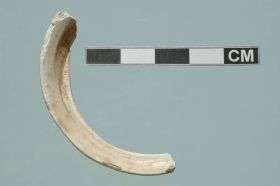
The archaeological team also found a bracelet made of a type of shell only found along the Red Sea, suggesting a possible trade link with the cradle of agriculture in the Near East. In addition, they unearthed clay floors of what may have been simple structures — possibly posts with some kind of matting overhead.
In the 1920s, British archaeologist Gertrude Caton Thompson found traces of the same domesticated grains in storage pits less than a mile from the current site. After the advent of carbon-dating technology, the grain was dated to 5,200 B.C., making the discovery the earliest evidence of agriculture in ancient Egypt. To this day, no earlier evidence of agriculture has been found in Egypt. But because no surrounding settlement was ever excavated, all kinds of questions remained about the context in which agriculture began to unfold in ancient Egypt.
"We had evidence that there was agriculture by 5,200 B.C. but not how it was used in a domestic context," said excavation co-leader René Cappers, a professor of paleobotany at the University of Groningen, the second-oldest university in the Netherlands. "Now, for the first time, we have domesticated plants and animals in a village context."
The latest findings date to the Neolithic period, a stage of human development that occurred at various times around world, beginning in 8,600 B.C. Sometimes called the New Stone Age, the period is characterized by the introduction of farming, animal husbandry and a movement away from hunting and gathering and toward a less nomadic way of life, with pots, tools and settlements.
Few clues have been found of Egypt's Neolithic past in the Nile Valley, possibly because they were either buried under silt from the Nile or wiped away when the river changed its course, the archaeologists said. The UCLA-RUG excavation site is located just outside the river valley in what is now a desert region.
With more than three feet of undisturbed strata at the site, the team expects to be able to piece together the evolution of domestication in the area between 5,200 B.C. and about 4,200 B.C.
"The arrival of the entire Neolithic package in ancient Egypt has always been treated as a moment in time, but we're finding stratified layers that will allow us to tease out the development of agriculture in this area as it developed over the course of hundreds of years," said Wendrich, who is one of the core faculty members at UCLA's Cotsen Institute of Archaeology.
Called the Fayum, the oasis where the team is working was surrounded by prehistoric sites, most of which were excavated in the 1920s. Generations of archaeologists had written off the area, until the UCLA-RUG team decided to re-explore the site.
"We knew that the settlement existed, but the site had been under cultivation since the 1960s, so archaeologists assumed it had been destroyed," Wendrich said. "We got to this site in the nick of time."
Modern laser-leveling farming techniques were about to annihilate the site in 2006, but the archaeological team succeed in rescuing the six-acre plot for future research by renting it for a year while they conducted their initial fieldwork. In the meantime, Egypt's Supreme Council of Antiquities has taken steps to permanently protect the site.
Source: University of California - Los Angeles


