Researchers investigate mass bat deaths
First it was bees that were mysteriously dying. Now it's bats.
Following a summer when honeybees across America began to die in great numbers, researchers are now finding thousands of sick bats in caves in New York, Vermont and Massachusetts. The deaths of the two species appear to be unrelated.
Bat specialists from the New York State Department of Conservation (NYDEC) have found 15 sites, up from four discovered last year, with sick bats: one in Massachusetts, two in Vermont and 12 in New York between Albany and Watertown.
To help diagnose the problem, NYDEC scientists are sending samples to Beth Buckles, assistant professor of biomedical sciences in Cornell's College of Veterinary Medicine.
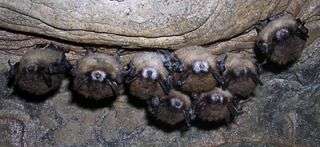
The affected bats are mostly little brown bats (Myotis lucifugus), among the most common North American bats. Other affected bats include the endangered Indiana bat (Myotis Sodalis), the northern long-eared bat (Myotis septentrionalis) and the eastern pipistrelle (Perimyotis subflavus). The bats live year round in the general area and usually hibernate each year in the same caves.
Buckles and colleagues are conducting postmortem exams of organs and tissues and testing for signs of inflammation, bacteria, viruses and toxins. So far, the researchers do not yet know what is causing the massive casualties, Buckles said.
"We have some good leads. We are continuing to look for infectious causes and are developing protocols to assess the bats' metabolic states. They may not have enough fat to make it through the winter," she said.
Many of the sick bats have a white fungus growing on their faces, are very thin and are congregating near to the cave entrances, a habit of ill bats. But it is "unprecedented" to find so many sick bats grouped near entrances, said Buckles.
In two caves the researchers studied last year -- that together had an estimated 18,000 bats -- up to 97 percent died. The caves found this year may hold between 150,000 and 200,000 bats, many of them sick.
"This winter, regarding the mortalities, to say we've lost large numbers now would be inaccurate, because we haven't," said Al Hicks, a bat expert at NYDEC. "But we expect them to start dying now in substantial numbers."
Researchers are checking for diseases that have previously caused mortality in other animals and may be impacting bats, said Buckles. Possible causes include parasites, distemper, toxins and rapid changes in temperature, though none of these has been verified. There is no evidence that the bat sickness poses any threat to humans, Buckles stressed.
"As a pathologist, we see an animal at one point in the disease process, [and] we try to get more bats as the season progresses to see how their tissues change," Buckles said. "We will continue to monitor bats from other parts of New York and the country so we can compare healthy bats with unhealthy bats."
Anyone who finds a dead or sick bat should not handle it, but call the local DEC, Buckles said.
As for bees, many continue to die inexplicably. Scientists are investigating whether a virus and pesticides may be playing roles.
Source: Cornell University


