Supermarkets hold power in milk supply chain
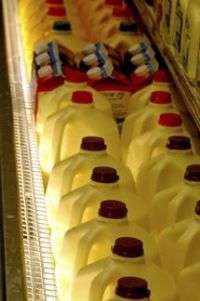
A model of the British milk supply chain, produced by Oxford University economists, confirms the common belief that supermarkets currently hold the bargaining power.
In the chain – farmer-owned co-operatives, milk processors and the supermarkets – all compete for their share of the profit from the price of each litre of milk on the shelves.
According to the research, co-funded by the Milk Development Council and government department Defra, the supermarkets’ strong bargaining position is largely due to three key aspects of the industry structure: the competition between milk processors; the purchase of milk under the supermarkets’ own labels; and the supermarkets’ ability to source from outside the domestic market if necessary.
The Oxford model explains how competitive forces influence buyer-seller relationships within the supply chain and what the implications are for supermarkets, farmers and processors in the price negotiations. Of the 15 pence potential profit margin on each litre of milk, only five pence per litre is available for negotiation between the processors. Supermarkets can dictate the upper price limit because they have the option of obtaining cheaper milk from abroad or overseas. The researchers found that supermarkets are able to secure 3.2 pence per litre or about 64 per cent of this five pence profit margin, and therefore nearly 90 per cent of the total supply chain profits.
The model shows that if there were fewer competing processors, an increased share of the profits would be returned to processors and the farmer-owned co-operatives, with less going to the supermarkets. It also shows that such a change would have very little impact on the price of milk for customers, but would reduce the amount of profit currently secured by supermarkets.
Lead author Dr John Thanassoulis, from the Department of Economics at Oxford University, said: ‘The sale of milk under the supermarkets’ own labels increases the competition between the processors as supermarkets are then in the position where they can switch to other suppliers or alter supply contracts. This reduces the bargaining power that processors and farmers have in negotiating their slice of profit in the supply chain.’
According to the Oxford economists, the processors are the stronger partners in the negotiations that follow with the farmer-owned co-operatives. Of the 36 per cent of the available margin left after negotiations with the supermarkets, they keep 73 per cent of the remaining profit or around 1.3 pence per litre. The processors’ bargaining-power stems from their ability to walk away from negotiations with the co-operatives to secure milk supplies directly from the farmers (at a small premium over the co-operative price).
Unsurprisingly, the model shows that farmer-owned co-operatives are in the weakest position: they are only able to secure 0.5 pence per litre, or about three per cent of the total supply chain profits from liquid milk. The model has been used to test a number of scenarios that could potentially increase the profit returned to farmers: one way of increasing their bargaining power would be to find ways of strengthening farmer co-operatives to ensure a more equal balance of power in the price negotiations.
Huw Thomas, head of market information at the Milk Development Council, said: ‘The findings prove what farmers have been saying for many years – they just don’t have the bargaining power needed to ensure they can run profitable businesses. The MDC and the NFU have for some years highlighted these imbalances in the supply chain, such as the shortcomings in milk contracts offered by processors to farmers with a non-negotiable price.
‘This has led to low levels of investment on British dairy farms which have the potential to be one of the most highly efficient in the world. Although the industry is moving forward in some areas, such as the development of dedicated supply chains, this new economic model provides understanding that will help develop a more efficient market place that should result in a better deal for the British dairy farmer.’ The model shows that if there were fewer competing processors, an increased share of the profits would be returned to processors and the farmer-owned co-operatives, with less going to the supermarkets. It also shows that such a change would have very little impact on the price of milk for customers, but would reduce the amount of profit currently secured by supermarkets.
Lead author Dr John Thanassoulis, from the Department of Economics at Oxford University, said: ‘The sale of milk under the supermarkets’ own labels increases the competition between the processors as supermarkets are then in the position where they can switch to other suppliers or alter supply contracts. This reduces the bargaining power that processors and farmers have in negotiating their slice of profit in the supply chain.’
According to the Oxford economists, the processors are the stronger partners in the negotiations that follow with the farmer-owned co-operatives. Of the 36 per cent of the available margin left after negotiations with the supermarkets, they keep 73 per cent of the remaining profit or around 1.3 pence per litre. The processors’ bargaining-power stems from their ability to walk away from negotiations with the co-operatives to secure milk supplies directly from the farmers (at a small premium over the co-operative price).
Unsurprisingly, the model shows that farmer-owned co-operatives are in the weakest position: they are only able to secure 0.5 pence per litre, or about three per cent of the total supply chain profits from liquid milk. The model has been used to test a number of scenarios that could potentially increase the profit returned to farmers: one way of increasing their bargaining power would be to find ways of strengthening farmer co-operatives to ensure a more equal balance of power in the price negotiations.
Huw Thomas, head of market information at the Milk Development Council, said: ‘The findings prove what farmers have been saying for many years – they just don’t have the bargaining power needed to ensure they can run profitable businesses. The MDC and the NFU have for some years highlighted these imbalances in the supply chain, such as the shortcomings in milk contracts offered by processors to farmers with a non-negotiable price.
‘This has led to low levels of investment on British dairy farms which have the potential to be one of the most highly efficient in the world. Although the industry is moving forward in some areas, such as the development of dedicated supply chains, this new economic model provides understanding that will help develop a more efficient market place that should result in a better deal for the British dairy farmer.’
Source: University of Oxford


