Penn researchers engineer first system of human nerve-cell tissue
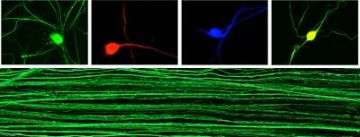
Researchers at the University of Pennsylvania School of Medicine have demonstrated that living human nerve cells can be engineered into a network that could one day be used for transplants to repair damaged to the nervous system. They report their findings in the February issue of the Journal of Neurosurgery.
“We have created a three-dimensional neural network, a mini nervous system in culture, which can be transplanted en masse,” explains senior author Douglas H. Smith, MD, Professor, Department of Neurosurgery and Director of the Center for Brain Injury and Repair at Penn.
Although neuron transplantation to repair the nervous system has shown promise in animal models, there are few sources of viable neurons for use in the clinic and insufficient approaches to bridge extensive nerve damage in patients.
The Stretch Test
In previous work, Smith’s group showed that they could induce tracts of nerve fibers called axons to grow in response to mechanical tension. They placed neurons from rat dorsal root ganglia (clusters of nerves just outside the spinal cord) on nutrient-filled plastic plates. Axons sprouted from the neurons on each plate and connected with neurons on the other plate. The plates were then slowly pulled apart over a series of days, aided by a precise computer-controlled motor system, creating long tracts of living axons.
These cultures were then embedded in a collagen matrix, rolled into a form resembling a jelly roll, and then implanted into a rat model of spinal cord injury. After the four-week study period, the researchers found that the geometry of the construct was maintained and that the neurons at both ends and all the axons spanning these neurons survived transplantation. More importantly, the axons at the ends of the construct adjacent to the host tissue extended through the collagen barrier to connect with the host tissue as a sort of nervous tissue bridge.
The Next Step
Now, the researchers have taken the next step and are applying this technique to living human nerve cells. Smith and his team obtained human dorsal root ganglia neurons (due to their robustness in culture) to engineer into transplantable nervous tissue.
The root ganglia neurons were harvested from 16 live patients following elective ganglionectomies, and four thoracic neurons were harvested from organ donors. The neurons were purified and placed in a specially designed growth chamber. Using the stretch growth technique, the axons were slowly pulled in opposite directions over a series of days until they reached a desired length.
The neurons survived at least three months in culture while maintaining the ability to generate action potentials, the electrical signals transmitted along nerve fibers. The axons grew at about 1 millimeter per day to a length of 1 centimeter, creating the first engineered living human nervous tissue constructs.
“This study demonstrates the promise of adult neurons as an alternative transplant material due to their availability, viability, and capacity to be engineered,” says Smith. “We’ve also shown the feasibility of obtaining neurons from living patients as a source of neurons for autologous, or self, transplant as well as from organ donors for allografts.”
Source: University of Pennsylvania


