Probing Question: Is the Electoral College an outdated system?
February 28, 2008 Probing Question: Is the Electoral College an outdated system?

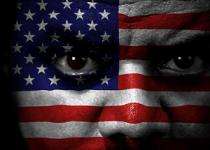
Photo illustration: Chris Maverick

In the 2000 presidential election, Al Gore beat George Bush by more than 500,000 votes, yet the lasting image of that campaign is poll workers in Florida examining voter cards for hanging chads. At stake were Florida's 25 Electoral College votes. Because a slim majority of Florida voters chose Bush, those 25 votes all went to the Republican candidate, turning overall popular-vote winner Gore into the election loser.

According to Eric Plutzer, the Electoral College was initially included in the Constitution because the Founding Fathers were skeptical that democracy could actually work and wanted to limit the influence of voters. Continued Plutzer, professor of political science and sociology at Penn State, "Since that time, voters have played a direct role in electing U.S. senators and representatves, and in nominating presidential candidates through primaries and caucuses. There is no longer a reason to insulate elections from the preferences of ordinary citizens."

It also distorts the way campaigns are run, Plutzer believes. "The Electoral College's 'winner take all' rule, used by 48 states and the District of Columbia, means that candidates trailing badly in a state don't bother to campaign there," he said. Each state is apportioned electoral voters based on its representation in Washington: two senators plus the state's number of representatives in the House. In presidential campaigns, said Plutzer, that means candidates tend to focus on the particular interests of voters in states with a large Electoral College vote and ignore the interests of small-state voters. That's why President Bush visited Pennsylvania and Ohio so often in 2004, he noted. "Political competition promotes citizen interest and civic participation," Plutzer continued. "In the last two elections, turnout rose, but only in the 14 or so so-called battleground states. Turnout elsewhere was unchanged."

While Plutzer feels the Electoral College has become an outdated system, he is quick to point out that the popular vote isn't a simple alternative.

"Remember what happened in Florida in 2000?" he asks. "If the final popular vote showed one candidate defeating the other by less than a million votes nationally, we would have to recount everywhere. Every state, every county, every precinct. Under the current system, when a candidate wins a landslide in California or Texas, it doesn't matter if we miss 100,000 votes. The outcome is unchanged. But if we went to a national popular vote, every vote would be important."

So, if the Electoral College is passe and the winner-take-all popular vote could create national chaos, is there a workable compromise?

Yes, said Plutzer. Under the Constitution, states have the freedom to decide how their Electoral College votes are allocated. He points out primaries and caucuses as an example. Each state has its own rules for voting, and state party systems decide how delegates are divided.

In fact, two states -- Nebraska and Maine -- use an alternative system of allocating their electoral votes, called the Congressional District Method. Electoral College voters in these states are required by law to follow the popular vote within their district, rather than the statewide popular vote. Interestingly, neither Maine nor Nebraska has ever had to split its electoral votes, since statewide winners in a single party have consistently swept all of the states' districts during elections. But, according to Plutzer, it is a move in the right direction.

The popular vote is the most desirable way to count votes, Plutzer concludes, but "we're at least a decade away from having reliable voting machines nationwide. Until we do, it would be unwise to amend the Constitution." Until then, he said, encouraging all states to use the Congressional District Method is the fairest way to elect a president while making sure every vote is relevant.

Eric Plutzer, is professor of political science and sociology in the College of the Liberal Arts.

Source: By Sue Marquette Poremba, Research/Penn State


print this article email this article download pdf blog this article bookmark this article     Stumble it Digg this share on Facebook retweet share on Reddit add to delicious
Rate this story - 4.4 /5 (14 votes)

Rank Filter

Move the slider to adjust rank threshold, so that you can hide some of the comments.


Display comments: newest first

  • bigwheel - Feb 28, 2008
    • Rank: not rated yet
    You can't amend something that would have to be changed. And
    we aren't going to change the constitution.
  • Doug_Huffman - Feb 28, 2008
    • Rank: 1 / 5 (1)
    FFs weren't 'skeptical', they were rightfully fearful of democracy, the rule of fools by fools.

    The 2A is there to protect COTUS from meddling fools. The 1A allows the fools to announce themselves and their intentions.

    Vote Constitution Party or write in Ron Paul. don't let the parties jam these maggots down our throats.
  • ToSeek - Feb 29, 2008
    • Rank: not rated yet
    Each state gets to decide how to set up its electors. It would be quite possible - without a constitutional amendment - for a state to say that the electors must support the winner of the national popular vote.
  • AJW - Feb 29, 2008
    • Rank: 5 / 5 (1)
    A problem stated around most elections is
    'Voter turn-out is low.'
    We remain a Republic not a democracy.
    We preach democracy and go to war to force others to adopt democracy as their
    government, while we maintain a 200 year
    old bias against common or popular vote.
    It seems to me we still have a lot of
    Tories and Royalist around. Why not make President Bush into King George in name as
    well.
  • mysticfree - Mar 03, 2008
    • Rank: not rated yet
    Ever notice how responsible people don't need to be told how to live their lives? All they need is have their lives, their livelihood, and their possessions protected from thieves. But when this isn't that basis of government --- when pork barrel projects, wasteful spending, regulations on what you say and think and do are the mainstay --- then democracy is nothing more than mob rule by the majority.

February 28, 2008 all stories

Comments: 5

4.4 /5 (14 votes)
  • Stumble this up

  • Digg this

  • share this

  • hide
  • Related Stories

  • Campaign spending affects electoral outcomes
    created Mar 18, 2009 | popularity not rated yet | comments 0
  • Numbers Game: NC State Research Gives New Look to Election Statistics
    created Nov 05, 2008 | popularity not rated yet | comments 0
  • Numbers Game: NC State Research Gives New Look to Election Statistics
    created Nov 03, 2008 | popularity not rated yet | comments 0
  • A pretty face can make a difference in whom you vote for
    created Oct 30, 2008 | popularity not rated yet | comments 0
  • How nonverbal cues in presidential debates are interpreted by voters
    created Oct 30, 2008 | popularity not rated yet | comments 0


  • hide
  • Relevant PhysicsForums posts

Other News

Message gone viral? Blame it on altruistic, yet image-conscious Internet  'e-mavens'

Message gone viral? Blame it on altruistic, yet image-conscious Internet 'e-mavens'

Other Sciences / Economics

created 3 hours ago | popularity 2 / 5 (1) | comments 0

(PhysOrg.com) -- Why do some online ad campaigns go viral while other online marketing messages gather "cyber-dust" on the information superhighway? The key may lie in the motivation of Internet users to email ...


Study: Race, class and gender shape religion's effect on American voters

Other Sciences / Social Sciences

created 22 hours ago | popularity not rated yet | comments 0

(PhysOrg.com) -- How Americans vote is strongly linked to their religious identities, but it is not an independent influence that transcends race, socio-economic class and gender, reports a new Cornell study.


Researcher: Faint writing seen on Shroud of Turin (AP)

Researcher: Faint writing seen on Shroud of Turin (Update)

Other Sciences / Archaeology & Fossils

created Nov 20, 2009 | popularity 2.4 / 5 (30) | comments 40

(AP) -- A Vatican researcher has rekindled the age-old debate over the Shroud of Turin, saying that faint writing on the linen proves it was the burial cloth of Jesus. Experts say the historian may be reading ...


Explained: The Discrete Fourier Transform

Explained: The Discrete Fourier Transform

Other Sciences / Mathematics

created Nov 25, 2009 | popularity 4.2 / 5 (25) | comments 8

(PhysOrg.com) -- In 1811, Joseph Fourier, the 43-year-old prefect of the French district of Isčre, entered a competition in heat research sponsored by the French Academy of Sciences. The paper he submitted ...


Climate change could boost incidence of civil war in Africa

Other Sciences / Social Sciences

created Nov 23, 2009 | popularity 2.4 / 5 (16) | comments 9

Climate change could increase the likelihood of civil war in sub-Saharan Africa by over 50 percent within the next two decades, according to a new study led by a team of researchers at University of California, Berkeley, ...