New satellite imaging research could save the lemur in Madagascar
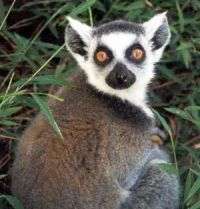
New satellite imaging research may help save the dwindling lemur population in the African nation of Madagascar.
Using satellite imagery, GIS and ecological and demographic data from the field, Robert W. Sussman, Ph.D., professor of anthropology in Arts & Sciences at Washington University in St. Louis, has studied the effects of deforestation on the ringtailed lemur population in Madagascar during the last forty years.
He has determined that while causes of deforestation vary in different parts of the African island nation, the total lemur (lemur catta) population has dropped by more than half since the 1950s. Sussman discussed his long-term field research project in "Habitat Monitoring by GPS in Madagascar" during the "From Global to Local: Impact of Field Research in Biological Anthropology" session Sunday, Feb. 17, at the annual meeting of the American Association for the Advancement of Science in Boston, Mass.
Sussman, who first began studying lemur populations in Madagascar in 1969, continues to conduct and coordinate long-term research of the demography, ecology and social organization of lemurs at the Beza Mahafaly Reserve and in southern Madagascar.
He is co-founder of the reserve, which began as part of a cooperative program in research, conservation, education and development between Washington University in St. Louis, Yale University and the University of Madagascar (currently University of Antananarivo), which also manages the reserve.
In the years since its development in 1978, hundreds of research papers have been written about the flora, fauna and people of Madagascar. Education programs on the local animals and conservation have been developed for the local people. Many non-Malagasy students have completed their doctoral field work in the area, and more than 100 local students have earned graduate degrees based on research done at and around the reserve.
Sussman now uses the reserve as a base for his GIS and satellite imagery studies of southwestern Madagascar — the entire range of the ringtailed lemurs. He is looking at the relationship between deforestation, land use by the human population, and the density and distribution of ringtailed lemurs.
While sifting through satellite data going back to 1950, Sussman and colleagues have determined a measure of "greenness" of the land over time. There is an 80 percent correlation between the level of greenness and the lemur population density, said Sussman. The lemurs congregate in the greener areas, but those areas are also the ones being deforested at the fastest rate.
While it is estimated that the lemur population in Madagascar has dropped to a total of approximately 750,000 from more than 1.5 million in the 1950s, Sussman hopes the trend will one day be reversed.
"Through education and conservation, we can make positive steps," he said. "We must work with the local people to help stop the damaging effects of deforestation, not only to the animal populations, but to the human population as well."
Source: Washington University in St. Louis


