Biologists surprised to find parochial bacterial viruses
Biologists examining ecosystems similar to those that existed on Earth more than 3 billion years ago have made a surprising discovery: Viruses that infect bacteria are sometimes parochial and unrelated to their counterparts in other regions of the globe.
The finding, published online this week by the journal Nature, is surprising because bacteria are ubiquitous on Earth. They've been found from the upper reaches of the atmosphere to miles below the ocean floor. Because of their ubiquity, scientists have long believed bacteria to be cosmopolitan, having similar genetic histories across the globe. The same was also believed to be true for phages, the viruses that infect bacteria.
"The idea that things in the microbial world can have endemic properties is relatively new," said study co-author Janet Siefert, a Rice University computational biologist who has made a half-dozen trips to one of the study sites in Mexico's remote Cuatro Ciénegas valley. "People really weren't talking about it until about a decade ago, and we certainly didn't expect to find this when we began our work in Mexico."
Bacteria are the dominant forms of life on Earth. They helped shape the planet's land, oceans and atmosphere for 3 billion years before the first appearance of multicellular creatures. Siefert and several of her co-authors began traveling to Cuatro Ciénegas in Mexico's Chihuahuan Desert in 2004 to study cyanobacteria living in a network of more than 200 spring-fed pools, or “pozas.” Cuatro Ciénegas' pozas have been compared to the Galapagos Islands, except that their endemic species -- at least 70 species in the valley are found nowhere else on Earth -- are separated from the rest of the world by mountains and a sea of sand rather than an ocean.
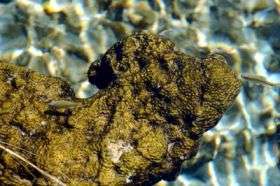
The cyanobacteria in the pozas live communally, forming coral-like structures called "stromatolites," or microbialites, that are geologically identical to 3.5 billion-year-old fossils that are believed to be the oldest evidence of life on Earth.
"We had very little funding when we started going to Cuatro Ciénegas," Siefert said. "We were taking a shot in the dark to see if we could better understand the physical, chemical and geological context of the bacterial communities and the stromatolites."
The work drew interest and seed funding from NASA's astrobiology program, which hoped the work might provide important clues about the way early life might develop on other planets.
Siefert said biogeography -- the study of species’ biodiversity and distribution across time and space -- has only recently been possible for viruses, mainly due to advancements in software and other computer tools. New sequencing technologies made it possible to analyze and geographically map the genetic differences among viral genotypes in Cuatro Ciénegas and other locations. The new study's findings contrast with previous studies that found viruses are widely dispersed on Earth and share almost the same genotypes.
Stromatolite samples collected from two pozas in 2004 were examined by several co-authors in the research group of San Diego State University biologist Forest Rohwer, who has prepared the world's largest database of phage DNA. In the first step of the tests, researchers crushed small bits of the coral-like stromatolites and extracted DNA from the samples. The DNA from each sample was decoded and compiled into a database called a "metagenome." The metagenomes from the Mexican pozas were compared with each other and with metagenomes from stromatilites in Highborne Cay, Bahamas. Finally, all three of these metagenomes were compared with Rohwer's phage database and with several large gene-sequence databases, like GenBank.
"Taken together, these results prove that viruses in modern microbialites display the variability of distribution of organisms on our planet," Rohwer said. "It also suggests that they may be derived from an ancient, microbial community."
The analyses found that the phages in the Bahamas and in both Mexican pozas shared only about 5 percent of the same DNA sequences. Moreover, the analyses revealed that the Mexican phages appeared to have evolved from ancient, ocean-going relatives. Siefert said the finding is amazing given that Cuatro Ciénegas has been cut off from the ocean for about 100 million years, but it complements prior findings of marine genetic signatures in some of Cuatro Ciénegas' other endemic species.
"Over that length of time, we would expect the marine signature to get washed out of the genetic code," she said. "In fact, when we compared the phages from the pozas to oceanic phages, we found cases where the pozas' phages were more closely related to marine relatives than were some of the phages found in other oceans."
Source: Rice University


