Hibernation-like behavior in Antarctic fish -- on ice for winter
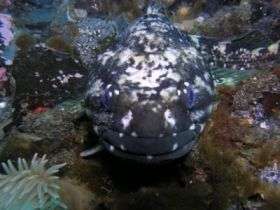
March 5, 2008 The 'Antarctic Cod' (Notothenia coriiceps)

The 'Antarctic Cod' (Notothenia coriiceps) became isolated from its warmer water cousins around 30 million years ago when the Antarctic circumpolar current was formed. Credit: Dr Hamish Campbell

Scientists have discovered an Antarctic fish species that adopts a winter survival strategy similar to hibernation. Reporting this week in the journal PLoS ONE, the online journal from the Public Library of Science, scientists from British Antarctic Survey (BAS) and the University of Birmingham reveal, for the first time, that the Antarctic ‘cod’ Notothenia coriiceps effectively ‘puts itself on ice’ to survive the long Antarctic winter.

The study showed that the fish activate a seasonal ‘switch’ in ecological strategy – going from one that maximises feeding and growth in summer to another that minimises the energetic cost of living during the long, Antarctic winter. The research demonstrates that at least some fish species can enter a dormant state, similar to hibernation that is not temperature driven and presumably provides seasonal energetic benefits. Scientists already know that Antarctic fish have very low metabolic rates and blood ‘antifreeze’ proteins that allow them to live in near-freezing waters. This study demonstrates that Antarctic fish - which already live in the ‘slow lane’ with extremely low rates of growth, metabolism and swimming activity - can in fact further depress these metabolic processes in winter.

Lead author Dr Hamish Campbell, formerly at the University of Birmingham, UK but now at University of Queensland, Australia said,

“Hibernation is a pretty complex subject. Fish are generally incapable of suppressing their metabolic rate independently of temperature. Therefore, winter dormancy in fish is typically directly proportional to decreasing water temperatures. The interesting thing about these Antarctic cod is that their metabolic rates are reduced in winter even though the seawater temperature doesn’t decrease much. It seems unlikely that the small winter reductions in water temperature that do occur are causing the measured decrease in metabolism. However, there are big seasonal changes in light levels, with 24 hour light during summer followed by months of winter darkness – so the decrease in light during winter may be driving the reduction in metabolic rates.”

Dr Keiron Fraser from BAS says,

“This is our first insight into how these fish live in winter. We have for the first time in the Antarctic, used cutting edge technologies combining tracking of free swimming fish in the wild and heart rate monitors to allow us to investigate just how these animals cope in winter with living in near freezing water and almost complete darkness for months on end. It appears they utilise the short Antarctic summers to gain sufficient energy from feeding to tide them over in winter. The hibernation-like state they enter in winter is presumably a mechanism for reducing their energy requirements to the bare minimum. The interesting question we still have to answer is why these fish greatly reduce feeding in winter when food is still available.”

Why these fish chose to adopt this hibernation-like strategy during winter is currently unclear, but it presumably provides energetic benefits. The traditional views of hibernation are being challenged constantly. This study introduces a new group of animals that appear to utilise a hibernation-like strategy that allows them to survive during the long winters in one of the harshest environments on Earth.

Source: British Antarctic Survey


print this article email this article download pdf blog this article bookmark this article     Stumble it Digg this share on Facebook retweet share on Reddit add to delicious
Rate this story - 5 /5 (3 votes)

Rank Filter

Move the slider to adjust rank threshold, so that you can hide some of the comments.


Display comments: newest first

  • superhuman - Mar 05, 2008
    • Rank: not rated yet
    They hibernate cause they don't like those dark cold winters, if I were one i know i would too! Pity we humans can't hibernate through winter.

March 5, 2008 all stories

Comments: 1

5 /5 (3 votes)
  • Stumble this up

  • Digg this

  • share this

  • hide
  • Related Stories

  • Feds reviewing humpback whale endangered status
    created Sep 27, 2009 | popularity not rated yet | comments 0
  • Krill discovered living in the Antarctic abyss
    created Feb 25, 2008 | popularity not rated yet | comments 0
  • Antarctic marine explorers reveal first biological changes after collapse of polar ice shelves
    created Feb 25, 2007 | popularity not rated yet | comments 0
  • Biologists save fish after landslide
    created Nov 20, 2009 | popularity not rated yet | comments 0
  • Red Sea coral seen to feed on jellyfish
    created Nov 17, 2009 | popularity not rated yet | comments 0


Other News

The six elephants in Sierra Leone were shot and "crudely butchered"

S.Leone elephants 'wiped out' by poachers: official

Biology / Ecology

created 5 hours ago | popularity 5 / 5 (3) | comments 3

Poachers "wiped out" the entire elephant herd in Sierra Leone's only wildlife park, wildlife managers said Thursday after police said they had arrested a gang of 10 poachers.


Knockouts in human cells point to pathogenic targets

Knockouts in human cells point to pathogenic targets

Biology / Cell & Microbiology

created 7 hours ago | popularity not rated yet | comments 0

(PhysOrg.com) -- Whitehead researchers have developed a new approach for genetics in human cells and used this technique to identify specific genes and proteins required for pathogens.


Whiteflies sabotage alarm system of plant in distress

Whiteflies sabotage alarm system of plant in distress

Biology / Plants & Animals

created 8 hours ago | popularity 5 / 5 (1) | comments 0

(PhysOrg.com) -- When spider mites attack a bean plant, the plant responds by producing odours which attract predatory mites. These predatory mites then exterminate the spider mite population, thus acting ...


First-ever blueprint of a minimal cell is more complex than expected

First-ever blueprint of a minimal cell is more complex than expected

Biology / Cell & Microbiology

created 3 hours ago | popularity 5 / 5 (6) | comments 0

What are the bare essentials of life, the indispensable ingredients required to produce a cell that can survive on its own? Can we describe the molecular anatomy of a cell, and understand how an entire organism ...


Ecological speciation by sexual selection on good genes: Is speciation adaptive?

Biology / Ecology

created 4 hours ago | popularity not rated yet | comments 0

Darwin suggested that the action of natural selection can produce new species, but 150 years after the publication of his famous book, 'On the Origin of Species', debate still continues on the mechanisms of speciation. New ...