Newly developed anti-malarial medicine treats toxoplasmosis
A new drug that will soon enter clinical trials for treatment of malaria also appears to be 10 times more effective than the key medicine in the current gold-standard treatment for toxoplasmosis, a disease caused by a related parasite that infects nearly one-third of all humans—more than two billion people worldwide.
In the March issue of PLoS Neglected Tropical Diseases, a research team based at the University of Chicago Medical Center shows that the drug, known as JPC-2056, is extremely effective against Toxoplasma gondii, the parasite that causes toxoplasmosis, without toxicity.
"JPC-2056 has the potential to replace the standard treatment of pyrimethamine and sulfadiazine," said infectious disease specialist Rima McLeod, professor of ophthalmology at the University of Chicago and senior author of the study. "The drug, taken by mouth, is easily absorbed, bioavailable, and relatively nontoxic. In tissue culture and in mice, it was rapidly effective, markedly reducing numbers of parasites within just a few days."
Untreated mice injected with the parasite "appeared ill," four days after the injection, the authors note, "with ruffled fur and hunched shoulders." Treated mice remained well.
"Studies in tissue culture found no evidence of the parasite or the plaques they produce 52 days after four days of treatment," said co-author Ernest Mui, a researcher in McLeod's laboratory.
"The absence of growth," the authors write, "indicates that this compound is 'cidal' and not merely 'static' for the active form of T. gondii.
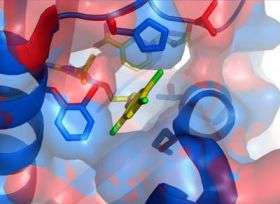
The drug inhibits the action of an enzyme, dihydrofolate reductase (DHFR), produced by the family of parasites that includes those that cause toxoplasmosis and malaria. It is structurally distinct from the human DHFR.
"The drug's effect on the malaria and Toxoplasma enzymes is robust," said McLeod. "It has much less effect on the human enzyme."
The new drug was effective against all malaria parasites, even those with multiple mutations that make them resistant to other anti-folate medicines, suggesting that "this family of parasites, including not just Toxoplasma but also various malaria parasites, will not easily develop resistance," she said.
Toxoplasma infection is "probably the most common parasitic infection in the world, causing very significant disease in those who have immature immune systems or who are immune-compromised," McLeod said. "New medications are urgently needed."
The standard medicines to treat the infection can cause severe side effects and many patients become hypersensitive to them. There are no medicines that can eliminate certain latent stages of the parasite's life cycle. There is no vaccine.
T. gondii infects humans through three principal routes: a newly infected pregnant woman passing the infection to her fetus; consumption of undercooked, infected meat; and ingestion of T. gondii oocysts in food, through accidental contamination from cat litter.
"An infected cat can excrete up to 20 million oocysts over two weeks," McLeod said. "Even a single oocyst is infectious and they can remain infectious in water for up to six months and in warm moist soil for up to a year."
Congenital toxoplasmosis, which occurs in an estimated 1 per 5,000 births a year in the United States, can cause severe vision loss, brain damage and even death. The annual cost of caring for these children may exceed $1 billion.
Also at increased risk are people with compromised immune systems, such as those with cancer, autoimmune disease, AIDS or transplant recipients. Even people with normal immune systems can suffer major organ damage from chronic infections. Eye disease leading to loss of sight is caused both during the primary infection and as a result of infection transmitted from mother to child. Recent epidemics in Surinam and French Guiana have been lethal even for young healthy victims. Studies have also found an association between chronic brain infection with Toxoplasma and diseases such as schizophrenia and epilepsy, although cause-and-effect relationships have not been proven.
JPC-2056 was developed in the late 1980s by teams led by Wilbur Milhous and Dennis Kyle of the Walter Reed Army Institute for Research in Silver Spring Maryland (both now at the University of South Florida), and David Jacobus of Jacobus Pharmaceutical Company. The original version was quite toxic, but the researchers found ways to reduce the toxicity and developed an oral version of the drug. Clinical trials using JPC-2056 to treat malaria are scheduled to begin later this year.
This new class of medicine holds "considerable promise for significant advances in the treatment of toxoplasmosis, which damages the eye and the brain," said McLeod, "as well as malaria, which kills one million children each year."
Source: University of Chicago


