Carbon Nanotubes Help Fix Bones
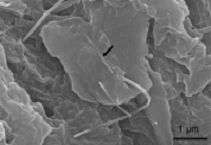
Healing a broken bone is a lengthy and awkward process. The current, most effective way to repair bone tissue is to ensure correct positioning of the bone during healing, usually by use of a plaster cast or splint. With the average time to repair bone fractures being around six weeks this is a slow process and one that can often be uncomfortable for the patient.
That could now change thanks to a new discovery by a team in Japan, who found that carbon nanotubes (CNTs), one-atom-thick layers of carbon rolled into hollow cylinders, could help speed up the process.
The researchers found that placing CNTs in contact with damaged bones in mice helps to regenerate bone tissue and reduce inflammation during healing. Measurements made during the formation of new bone material revealed that the CNTs become integrated into the bone matrix itself, acting as a starting point for new bone tissue to begin to grow.
"Bone healing occurs earlier because CNTs act as a scaffold for bone regeneration," said Professor Naoto Saito of the Applied Physical Therapy Department at Shinshu University in Japan. "We believe that this will be the same for any of the bones in the body."
When the CNTs were used in conjunction with a bone morphogenetic protein (BMP), commonly used to facilitate bone regrowth, the production of new bone material was accelerated.
This study reveals a previously unknown property of carbon nanotubes and may facilitate the development of new scaffold materials for medical applications. Using CNTs in conjunction with conventional healing methods such as the plaster cast and BMPs could promote quicker bone repair and fracture healing. "We aim to study the safety of CNTs in vivo to determine how useful they will be in bone-healing treatments," said Saito.
The excellent biocompatibility demonstrated by the CNTs means they could also be used in biomaterials such as plates and screws used to repair damaged bone tissue, and in implants.
Citation: Small, 2008, 4, 240; doi 10.1002/smll.200700670
Source: Wiley, by Sophie Ladden


