Hissing Cockroaches Are Popular, But They Also Host Potent Mold Allergens
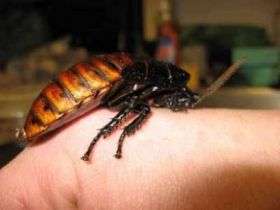
Their gentle nature, large size, odd sounds and low-maintenance care have made Madagascar hissing cockroaches popular educational tools and pets for years. But the giant insects also have one unfortunate characteristic: Their hard bodies and feces are home to many mold species that could be triggering allergies in the kids and adults who handle the bugs, according to a new study.
Researchers have identified 14 different types of mold on and around this species of cockroach, including several molds associated with allergies and others that can cause secondary infections if they enter the lungs or an open wound.
“This is mainly a point of public awareness,” said Joshua Benoit, lead author of the study and a doctoral candidate in entomology at Ohio State University. “We are not criticizing their use. We are just saying that if you handle these cockroaches, you should wash your hands when you’re done.
“It’s also best to maintain the cage. It’s not a pet you can ignore,” he said. “Without regular cleaning, feces will build up, and the old exoskeletons they shed will build up. And that’s where a lot of the problems happen.”
The research is published in the March issue of the journal Mycoses.
The natural life of the Madagascar hissing cockroach, or Gromphadorhina portentosa, is not well understood. But in captivity, the insects thrive on dog food and fruit, reproduce plentifully and do not bite. They grow to between 2 and 3 inches long and 1 inch wide, and will make their characteristic hissing sound if they are squeezed or otherwise feel threatened.
Benoit, an allergy sufferer himself, suspected the insects’ large bodies and moist living environments might combine to create a prime breeding ground for mold.
Some people are allergic to the species of cockroaches that are household pests. In those cases, the bugs’ actual bodies contain allergens. In the case of the Madagascar hissing cockroaches, the most potent mold allergens live on and around the insects instead.
Benoit and colleagues examined the insects from an Ohio State-based colony as well as those found in home collections, zoos, pet stores and science classrooms across Ohio.
The research group tested the feces first, and, as expected, found mold in the bugs’ waste. Then the team examined the giant cockroaches themselves, both outside and inside their bodies, to see what other allergens might be present.
The most commonly found mold species found on the body surfaces of young and adult Madagascar hissing cockroaches were Rhizopus, Penicillium, Mucor, Trichoderma and Alternaria, several of which are listed by the Centers for Disease Control and Prevention (CDC) as common indoor molds. Colonies of the mold species Aspergillus niger, a common contaminant of food, were particularly plentiful in the feces and external shells that had been discarded as the insects molted.
Few molds were found inside the cockroaches’ bodies.
Molds are fungi that grow best in humid conditions, and spread and reproduce by making spores. Benoit said all of the mold species found on and around the hissing cockroaches are capable of producing huge quantities of spores. And the spores themselves can get on bug handlers’ skin or be inhaled, triggering allergic responses in those sensitive to the molds.
For people who are allergic to molds, exposure can cause symptoms such as nasal stuffiness, itchy or burning eyes, wheezing or skin irritation, according to the CDC. Some people with serious allergies to molds may have more severe reactions.
Benoit now is pursuing additional studies on one surprise among the findings: Symbiotic mites also live on the cockroaches, and help keep them clean.
“The mites sweep the surface and remove old food particles and debris, so they remove places on which fungi can grow,” Benoit said.
Source: Ohio State University


