Smelling a rat to catch a rat
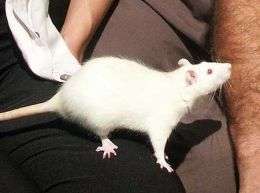
A novel experiment using laboratory rats to attract wild rats could pave the way for “rat perfumed” bait capable of reducing the millions of rats threatening New Zealand’s native species, say Massey conservation researchers.
Using caged lab rats as decoys, or “Judas” rats, Anna Gsell and Mark Seabrook-Davison, both Auckland-based PhD researchers at Massey’s Institute of Natural Resources, placed a series of cages near private bush on a farm north of Albany for their experiment.
The scientists recorded trails of paw prints - evidence that hordes of rats had scurried out of the bush to check out their caged cousins. They also used cages without actual rats but containing rat-scented bedding. These also attracted wild rats.
“The idea is based on the mate searching behaviour of rodents in the wild,” they say.
“We wanted to see whether we could use the odour of lab rats to attract wild rats,” says Ms Gsell, who hopes the positive results of the study will open the way for the commercial creation of a synthetic “rat perfume” from rat urine used in baits and traps.
Word of their study – carried out over the past four months at Mr Seabrook-Davison’s farm in Coatesville - has also reached the Department of Conservation. DOC recruited the researchers and their rats for an emergency rat-catching mission on a pest-free island in the Hauraki Gulf where a rogue rat was seen. The university’s “Judas” rats were walked on leashes around areas of the island, leaving their scent in the hope of attracting the vagrant wild rat, which was caught the following day 50 metres from where the rats were placed in cages.
Ms Gsell and Mr Seabrook-Davison say the results look very promising and could spell doom for the estimated millions of introduced Norway and Ship rats - major predators of many of New Zealand’s indigenous animals.
Source: Massey University


