Brain scientist shedding light on learning, memory
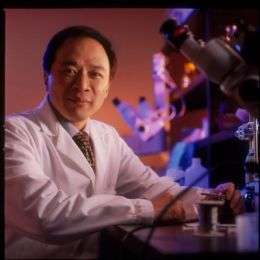
Neurons spoke to Dr. Joe Z. Tsien when he was a sophomore college student searching for some meaningful extracurricular activity.
He had stopped by the lab of a brain researcher at Shanghai’s East China Normal University. The room was dark except for a light shining on the brain. “You could hear this pop, pop, pop, pop,” says Dr. Tsien, brain scientist who recently came to the Medical College of Georgia from Boston University. “At that moment, I got interested in the brain.
“We study the questions that many people are always curious about – how the brain works, how memory works – then take it down to different levels. What is the molecular basis for the memory process" That means what genes are involved in laying down memory at a very fundamental level"” says the Georgia Research Alliance Eminent Scholar in Cognitive and Systems Neurobiology and co-director of the MCG School of Medicine’s new Brain Discovery Institute. “We have been able to identify very critical memory genes and manipulate them in such a way that we can either turn them off, so the memory of mice is impaired, or enhance them.”
He’s talking about Doogie, a mouse that over-expresses a “smart” gene in the hippocampus, a portion of the brain critical to memory and attacked by Alzheimer’s. NMDA receptors are essentially small pores on cell membranes that let ions in and increase neuronal activity and communication. Younger people have higher amounts of a NMDA subunit, NR2B, that keeps communication channels open longer so more information is shared. As people age, they switch to subunit NR2A, presumably because evolution has figured out by then we should have transmitted our genes to offspring, he says. Dr. Tsien and his colleagues made Doogie by over-expressing the NR2B gene and a conditional knockout by eliminating another NMDA receptor subunit.
Doogie was better at remembering and putting things in context, able to quickly recognize something he had seen before and move on to explore something new. He made the cover of Time magazine in 1999 and was one of Science magazines top-10 scientific breakthroughs that year. The “dumb” mouse, on the other hand, couldn’t find his way out of a maze.
Dr. Tsien also has found that intelligence requires teamwork, that neurons work in cliques not only to remember specifics but also to generalize knowledge, which essentially defines intelligence.
To get a good handle on the extent of simultaneous neuronal activity, he and his former postdoctoral fellow, Dr. Longnian Lin, first developed a technique to record the activity of up to 200 mouse neurons, rather than the 20 to 30 previously possible. They then identified a small number of neurons in the hippocampus of a mouse that consistently respond to the concept of a bed or nest. Make that nest inaccessible by covering it with glass, for example, and the cells and mouse become disinterested, they showed in research published March 2007 in Proceedings of the National Academy of Sciences.
“Intelligence is really built on memory, your experiences from the past, translating that into guidelines so when you seen a new situation, you know what you need to do,” says Dr. Tsien, whose collective contributions to learning and memory were featured on the July 2007 cover of Scientific American. “That helps us not only recognize our bed, for example, but to generally understand what a bed is and to know one when we see it. You check into a hotel, you know where to sleep. When you come to my office, you know where to sit. You don’t sit in the floor or on my table. You sit on the chair. The chair may not be exactly like one you have seen before, but you know it’s a chair. That is a basic form of intelligence.”
His next project, the brain-decoding project, is about putting things in context as well, and is a major reason he came to MCG. “It’s really trying to understand the essential rules of how the brain operates,” says Dr. Tsien, who brought a research team of 10 with him from Boston and will recruit about eight scientists over the next two years. “It may not be a perfect analogy, but it’s similar to the human genome project, where you try to assess the code. By understanding that, you form a basis to not only understand how biology works, but also how therapeutic strategies should be developed. It’s a very systematic, large-scale effort to understand the brain.”
One goal is understanding biology gone wrong, as it does in Alzheimer’s. His lab has generated an animal model of early onset of the disease and is working to find ways to delay it. “If your brain does not kick in Alzheimer’s disease until age 90, that is like a cure,” he says. Another option, where Doogie may be able to help, is making better use of remaining healthy neurons in someone who already has the disease by increasing smart gene expression. “It may make those neurons work more efficiently, be better at processing information,” says Dr. Tsien.
“Once you understand the rules, you can imagine that those design principles can be applied to the development of new-generation computers and robots,” he says. “Once you understand the genes, the genetic codes, you can begin to identify the relationship between the mutations in those genes and disease. It gives you a better handle on how to treat it. Right now, for example, there is tremendous difficulty in developing drugs to treat schizophrenia.” One problem is the lack of good animal models; it’s hard to know when an animal is hallucinating or depressed. More objective measures, such as neurophysiological or other biological markers, could enable such studies, Dr. Tsien says.
He’s excited that fellow brain researchers at MCG along with the system neurobiologists he’s recruiting will take the lead on breaking the brain’s code so that neuron speech – or silence – will be understood. “I am very excited about the leadership here and the Georgia Research Alliance is a fantastic mechanism to give researchers the opportunity to pursue really fundamental questions,” says Dr. Tsien.
“Joe is an energetic scientist who already has made major contributions to our understanding of the complex brain that defines each of us,” says Dr. D. Douglas Miller, dean of the MCG School of Medicine. “His work is at the core of what our new Brain Discovery Institute is about: putting together the scientific pieces of how the brain works and finding optimal ways to repair human disease when it doesn’t.”
“Joe Tsien’s work has brought us closer to deciphering the underlying code of memory,” echoes Mike Cassidy, president of the Georgia Research Alliance. “His groundbreaking research is already being applied to the development of a new generation of intelligent computers. I feel Joe’s arrival foretells a very exciting future for neuroscience research in Georgia.”
Source: Medical College of Georgia


