Retirees on the move are boon to some rural communities
Older people who move to rural retirement destinations are sometimes called "grey gold" because of the boon they are to the local economies. But the newcomers also drive up housing prices and can have other negative effects on communities, two Cornell researchers have found.
When retirees move to town and buy homes, for example, the researchers found that affordable housing becomes less available to such service professionals as teachers and nurses.
"Almost 10 percent of Americans aged 60-plus migrated between 1995 and 2000, with a disproportionate share of them moving to rural communities," said Professor David Brown, who conducted research on retiree migration with Senior Research Associate Nina Glasgow. Both are in the Department of Development Sociology in the College of Agriculture and Life Sciences at Cornell.
The researchers will publish the results of their nationwide study in a forthcoming book, "Rural Retirement Migration" (Springer Publishing), in May; they focused on their New York state findings in a recent issue of "Rural New York Minute," a free monthly publication produced by Cornell's Community and Rural Development Institute.
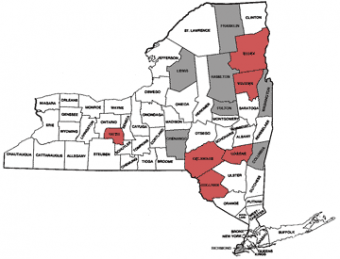
The researchers found that 12 New York counties -- of which nine are rural -- have more older adults moving in than moving out. Yates, Essex, Warren, Delaware, Sullivan and Greene counties, in particular, have high in-movement of older people.
Older in-migrants, say the researchers, tend to be "young old" (between ages 60-74) and have more education and higher incomes than the long-term elderly populations in rural areas.
"They have a positive impact on the real estate market and on construction, provide financial and technical assistance to a wide array of civic needs, volunteer in a diverse set of activities, and they invigorate the arts and cultural scene," write the researchers.
What remains to be seen, however, is whether the in-migrants will become a drain on communities as they age and require more local services.
"So far, our findings indicate that they are not moving elsewhere," said Glasgow, "and we found that 30 percent of in-migrants have adult children living nearby."
Source: Cornell University


