Researchers use high tech in mold watermark to protect plastic products from piracy
March 28, 2008 Researchers use high tech in mold watermark to protect plastic products from piracy

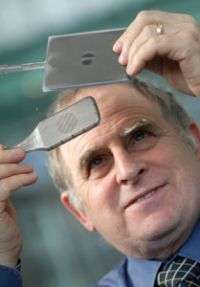
Researchers at WMG at the University of Warwick have devised a high tech way to add Anti-counterfeiting to plastic products as they are created in the moulding process. The process could cost less than one per cent of the total cost of manaufacturing the product.

Lead researcher Professor Gordon Smith said:

"There is an enormous amount of interest in anti-counterfeiting technology for plastic products. We at the University of Warwick are working on several processes to prevent plastic components being copied and this 'in mould' process is the first of them to be developed for use."

"For commercial reasons we cannot detail collaborators but we are now exploring its use with one company that is plagued by the failure of a counterfeit plastic based safety critical product which is made to look exactly like their safety critical product and therefore damages their reputation as well as losing them sales."

The watermark is created as an intrinsic part of the plastic product as it is being moulded. It would require very detailed technical knowledge and equipment to even attempt to replicate the watermark process.

Professor Smith expects that the new technology will be of significant interest to a range of manufacturer’s products such as DVD s and other discs in the entertainment and computing markets to plastic containers used by a range of consumer industries.

Source: University of Warwick


print this article email this article download pdf blog this article bookmark this article     Stumble it Digg this share on Facebook retweet share on Reddit add to delicious
Rate this story - 4.5 /5 (2 votes)


March 28, 2008 all stories

Comments: 0

4.5 /5 (2 votes)
  • Stumble this up

  • Digg this

  • share this

  • hide
  • Related Stories


  • hide
  • Relevant PhysicsForums posts

Other News

New 'finFETS' promising for smaller transistors, more powerful chips

New 'finFETs' promising for smaller transistors, more powerful chips

Technology / Semiconductors

created 7 hours ago | popularity 4.9 / 5 (7) | comments 2

(PhysOrg.com) -- Purdue University researchers are making progress in developing a new type of transistor that uses a finlike structure instead of the conventional flat design, possibly enabling engineers ...


New search technique for images and videos has broad applications

New search technique for images and videos has broad applications

Technology / Computer Sciences

created 5 hours ago | popularity 5 / 5 (3) | comments 0

(PhysOrg.com) -- Engineers at the University of California, Santa Cruz, have developed a powerful new approach to a fundamental problem in computer vision: how to program a computer to recognize or categorize ...


Hydrogen milestone moves energy independence one step forward

Hydrogen milestone moves energy independence one step forward

Technology / Energy

created 5 hours ago | popularity 3.3 / 5 (4) | comments 1

(PhysOrg.com) -- Big things often come in small packages. That's certainly the case with the potential created by recent successes in hydrogen research at Idaho National Laboratory.


Google says its news approach is "fully consistent with copyright law"

Google says Murdoch stories can be taken off

Technology / Internet

created 8 hours ago | popularity not rated yet | comments 1

Google said on Tuesday, in response to threats by Rupert Murdoch to ban the search engine from listing content from his news empire, that any company could ask to have stories taken off. ...


Improving security with face recognition technology

Improving security with face recognition technology

Technology / Computer Sciences

created 10 hours ago | popularity 3.3 / 5 (3) | comments 2

A number of U.S. states now use facial recognition technology when issuing drivers licenses. Similar methods are also used to grant access to buildings and to verify the identities of international travelers. ...