For the paper trail of life on Mars or other planets, find cellulose
Looking for evidence of life on Mars or other planets? Finding cellulose microfibers would be the next best thing to a close encounter, according to new research from the University of North Carolina at Chapel Hill.
The cover story for the April issue of the journal Astrobiology, the new research also pushes back the earliest direct evidence of biological material on Earth by about 200 million years.
Cellulose is the tough, resilient substance best-known as the major structural component of plant matter. It is one of the most abundant biological materials on Earth, with plants, algae and bacteria generating an estimated 100 gigatons each year. Prehistoric forms of cellulose were made by cyanobacteria, the blue-green algae and bacteria still found in almost every conceivable habitat on land and in the oceans, which is known to have been present on Earth 2.8 billion years ago.
Jack D. Griffith, Ph.D., Kenan Distinguished Professor of microbiology and immunology at the UNC School of Medicine, found cellulose microfibers in samples he took from pristine ancient salt deposits deep beneath the New Mexico high desert.
“The age of the cellulose microfibers we describe in the study is estimated to be 253 million years old. It makes these the oldest native macromolecules to date to have been directly isolated, visualized and examined biochemically,” said Griffith, who is also a virology professor at the UNC Lineberger Comprehensive Cancer Center.
Until now, the oldest evidence of biological material from fragments of ancient protein – found in Tyrannosaurus Rex dinosaur fossils – was dated at 68 million years.
According to Griffith, the most primitive life forms likely developed means of polymerizing glucose – the energy currency of all known carbon-based life forms – into cellulose as a structural molecule. “Cellulose is like the bacteria’s house, the biofilm surrounding them. Plants adopted cellulose as their structural entity, and insects changed cellulose slightly to make kitin of which their exoskeletons are formed,” he said.
Griffith’s study took him to the U.S. Department of Energy’s Waste Isolation Pilot Plant (WIPP), the world’s first underground repository licensed to safely and permanently dispose of radioactive waste left over from nuclear weapons research and production, which is located near Carlsbad, N.M.
The waste is placed more than 2,000 feet below the surface in rooms excavated from the salt deposits that were laid more than 200 million years ago. The site was chosen to hold the waste because salt is somewhat plastic and will flow to seal any cracks that develop.
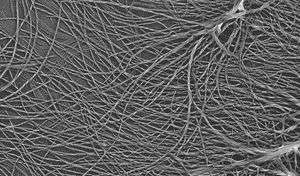
The salt samples Griffith retrieved from the WIPP were studied in his transmission electron microscopy lab at the Lineberger Comprehensive Cancer Center. In examining the content of fluid “inclusions”, or microscopic bubbles, in the salt and in solid halite (“rock salt”) crystals, he and his team found abundant cellulose microfibers that were “remarkably intact.”
Their examination clearly revealed the cellulose was in the form of microfibers as small as five nanometers in diameter, as well as composite ropes and mats. “The cellulose we isolated from the ancient salt deposits is very much like real, modern day cellulose: it looks like cellulose, behaves like cellulose, it’s chopped up by the same enzymes that cut modern day cellulose and it’s very intact,” Griffith said.
As to evidence of ancient DNA, Griffith said it was observed, but in much lesser amounts than cellulose.
“So in looking for evidence of life on Mars, for bacteria or higher plants that existed on Mars or other planets in the solar system, then looking for cellulose in salt deposits is probably a very good way to go. Cellulose appears to be highly stable and more resistant to ionizing radiation than DNA. And if it is relatively resistant to harsh conditions such as those found in space, it may provide the ideal ‘paper trail’ in the search for life on other planets.”
Source: University of North Carolina at Chapel Hill


