Cuneiform clay tablet translated for the first time
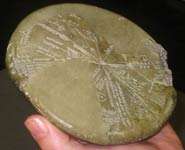
March 31st, 2008 Cuneiform clay tablet translated for the first time

A cuneiform clay tablet that has puzzled scholars for over 150 years has been translated for the first time. The tablet is now known to be a contemporary Sumerian observation of an asteroid impact at Köfels, Austria and is published in a new book, 'A Sumerian Observation of the Köfels' Impact Event.'

The giant landslide centred at Köfels in Austria is 500m thick and five kilometres in diameter and has long been a mystery since geologists first looked at it in the 19th century. The conclusion drawn by research in the middle 20th century was that it must be due to a very large meteor impact because of the evidence of crushing pressures and explosions. But this view lost favour as a much better understanding of impact sites developed in the late 20th century.

In the case of Köfels there is no crater, so to modern eyes it does not look as an impact site should look. However, the evidence that puzzled the earlier researchers remains unexplained by the view that it is just another landslide.

This new research by Alan Bond, Managing Director of Reaction Engines Ltd and Mark Hempsell, Senior Lecturer in Astronautics at Bristol University, brings the impact theory back into play. It centres on another 19th century mystery, a Cuneiform tablet in the British Museum collection No K8538 (known as "the Planisphere").

It was found by Henry Layard in the remains of the library in the Royal Place at Nineveh, and was made by an Assyrian scribe around 700 BC. It is an astronomical work as it has drawings of constellations on it and the text has known constellation names. It has attracted a lot of attention but in over a hundred years nobody has come up with a convincing explanation as to what it is.

With modern computer programmes that can simulate trajectories and reconstruct the night sky thousands of years ago the researchers have established what the Planisphere tablet refers to. It is a copy of the night notebook of a Sumerian astronomer as he records the events in the sky before dawn on the 29 June 3123 BC (Julian calendar). Half the tablet records planet positions and cloud cover, the same as any other night, but the other half of the tablet records an object large enough for its shape to be noted even though it is still in space. The astronomers made an accurate note of its trajectory relative to the stars, which to an error better than one degree is consistent with an impact at Köfels.

The observation suggests the asteroid is over a kilometre in diameter and the original orbit about the Sun was an Aten type, a class of asteroid that orbit close to the earth, that is resonant with the Earth's orbit. This trajectory explains why there is no crater at Köfels. The in coming angle was very low (six degrees) and means the asteroid clipped a mountain called Gamskogel above the town of Längenfeld, 11 kilometres from Köfels, and this caused the asteroid to explode before it reached its final impact point. As it travelled down the valley it became a fireball, around five kilometres in diameter (the size of the landslide). When it hit Köfels it created enormous pressures that pulverised the rock and caused the landslide but because it was no longer a solid object it did not create a classic impact crater.

Mark Hempsell, discussing the Köfels event, said: "Another conclusion can be made from the trajectory. The back plume from the explosion (the mushroom cloud) would be bent over the Mediterranean Sea re-entering the atmosphere over the Levant, Sinai, and Northern Egypt.

"The ground heating though very short would be enough to ignite any flammable material - including human hair and clothes. It is probable more people died under the plume than in the Alps due to the impact blast."

Source: University of Bristol


print this article email this article download pdf blog this article bookmark this article     Digg this Stumble it share on Facebook share on Reddit add to delicious save to Yahoo! bookmarks
4.5/5 after 99 votes

Rank Filter

Move the slider to adjust rank threshold, so that you can hide some of the comments.


Display comments: newest first

  • superhuman - Mar 31, 2008
    • Rank: 3.5 / 5 (4)
    Thats an amazing discovery, its beautiful how astronomy, archeology, geology and computer science all played their part to finally solve the puzzle!

    Kudos to Sumerian Astronomer, who left such a precise message for us more then 4000 years ago!

    I wonder what was the effect on European tribes.
  • zek - Mar 31, 2008
    • Rank: 5 / 5 (1)
    Response to Superhuman:

    Check out the publications of the Society for Interdisciplinary Studies. They have a compendium of articles published concerning Bronze Age Disasters. If you liked this article above, you will like this publication. You should also check out any and all of the books written or co-authored by Mike Baillie, the Dendrochronologist.
  • Sean_W - Mar 31, 2008
    • Rank: 5 / 5 (1)
    So let me see if I have this straight:

    One hundred and fifty years ago the work of an archaeologist uncovered the work of a scribe from 700 BC who was rerecording a record from an astronomer in 3123 BC who witnessed an event. This documentation was combined with advanced astronomical computations and geological information to illuminate this event.

    Talk about interdisciplinary collaboration.
  • FRagoczy - Apr 01, 2008
    • Rank: not rated yet
    This is fascinating, and just the kind of article I love. I confess, though, I am not clear on how we got to 3123 BC. The Assyrian in 700 BC copied records of a Sumerian astronomer in 3123 BC? Could they read 2400 year old records?
  • plaasjaapie - Apr 01, 2008
    • Rank: not rated yet
    Good one!
  • TomV - Apr 14, 2008
    • Rank: 5 / 5 (2)
    This is absolutely, positively ludicrous.

    Debunked here: http://bluecollar...nly-not/

    (no, it's not *MY* blog)
  • Myria83 - Jun 10, 2009
    • Rank: not rated yet
    Zecharia Sitchin interpreted this tablet in a different way; his translation does make sense, but it is just too "heterodox" to be accepted by other archeologists... Well, his theory as a whole cannot be integrated into mainstream thought.
  • Myria83 - Jun 10, 2009
    • Rank: not rated yet
    This is absolutely, positively ludicrous.

    Debunked here: http://bluecollar...nly-not/

    (no, it's not *MY* blog)


    http://bluecollar...empsell/

March 31st, 2008 all stories
Space & Earth / Space Exploration

Comments: 8
Rank: 4.5/5 after 99 votes

  • Stumble this up

  • Digg this

  • Share it:
  • share on Facebook
  • share on MySpace
  • share on Slashdot
  • rss-newsfeed
  • share on Google
  • share on Reddit
  • add to delicious
  • save to Yahoo! bookmarks
  • share on Windows Live
  • Add to Mixx!
Rating: 4.5/5 after 99 votes

  • Related Stories

  • Semen quality depends upon antioxidants
    created Jun 02, 2009 | popularity not rated yet | comments 0
  • New pill to treat multiple sclerosis
    created Apr 30, 2009 | popularity not rated yet | comments 0
  • Biologist discusses sacred nature of sustainability
    created Feb 15, 2009 | popularity not rated yet | comments 0
  • New software to improve design tools
    created Jan 13, 2009 | popularity not rated yet | comments 0
  • Motorola Unveils Mobile Phone Made Using Recycled Bottle Plastics and New 3G Touch Tablet with Customizable Home Screen
    created Jan 06, 2009 | popularity not rated yet | comments 0

Tags


  • Physicists Demonstrate Quantum Memory with Matter Qubits
    Physicists Demonstrate Quantum Memory with Matter Qubits
    Physics / General Physics
    created 17 hours ago | popularity 4.5 / 5 (11) | comments 1
  • 'Holey' Nanosheets for Wastewater Dye Removal
    Nanotechnology / Nanomaterials
    created Jul 01, 2009 | popularity 5 / 5 (5) | comments 1
  • Jellyfish Robot Swims Like its Biological Counterpart
    Jellyfish Robot Swims Like its Biological Counterpart
    Electronics / Robotics
    created Jun 26, 2009 | popularity 4.4 / 5 (7) | comments 1
  • Could Maxwell's Demon Exist in Nanoscale Systems?
    Could Maxwell's Demon Exist in Nanoscale Systems?
    Physics / General Physics
    created Jun 24, 2009 | popularity 4.4 / 5 (18) | comments 29
  • Living Safely with Robots, Beyond Asimov's Laws
    Living Safely with Robots, Beyond Asimov's Laws
    Electronics / Robotics
    created Jun 22, 2009 | popularity 4.6 / 5 (50) | comments 39
  • Other News

    Global warming tactic cools climate but won’t help corals, say researchers

    Space & Earth / Earth Sciences

    created 14 hours ago | popularity 2.3 / 5 (3) | comments 5

    (PhysOrg.com) -- “Geoengineering” experiments proposed to reduce global warming by blocking sunlight with atmosphere-injected particles may cool the world but still leave carbon dioxide levels dangerously high, Stanford scientists ...


    Coolest spacecraft ever in orbit around L2

    Coolest spacecraft ever in orbit around L2

    Space & Earth / Space Exploration

    created 17 hours ago | popularity 4.8 / 5 (4) | comments 3

    (PhysOrg.com) -- Last night, the detectors of Planck's High Frequency Instrument reached their amazingly low operational temperature of -273°C, making them the coldest known objects in space. The spacecraft ...


    Senator may have won fight over private rocket manufacturing

    Space & Earth / Space Exploration

    created 17 hours ago | popularity 4.5 / 5 (2) | comments 2

    For months, a powerful Republican senator from Alabama has fought the Obama administration to block $150 million that the White House wanted to spend to help private companies build rockets capable of reaching the international ...


    The least sea ice in 800 years

    The least sea ice in 800 years

    Space & Earth / Earth Sciences

    created Jul 01, 2009 | popularity 4.3 / 5 (57) | comments 42

    New research, which reconstructs the extent of ice in the sea between Greenland and Svalbard from the 13th century to the present indicates that there has never been so little sea ice as there is now. The ...


    Gas around young galaxy

    Intense heat killed the Universe's would-be galaxies, researchers say

    Space & Earth / Astronomy

    created Jul 01, 2009 | popularity 3.1 / 5 (18) | comments 23

    (PhysOrg.com) -- Our Milky Way galaxy only survived because it was already immersed in a large clump of dark matter which trapped gases inside it, scientists led by Durham University's Institute for Computational ...