Asian waterbirds stage remarkable comeback
April 3, 2008 Asian waterbirds stage remarkable comeback

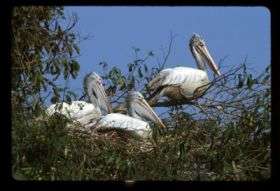
Spot-billed pelicans have increased by 400 percent since conservation measures have been enacted in Cambodia's Prek Toal. Credit: Eleanor Briggs

According to a report released today by the Wildlife Conservation Society (WCS), several species of rare waterbirds from Cambodia’s famed Tonle Sap region have staged remarkable comebacks, thanks to a project involving a single team of park rangers to provide 24-hour protection to breeding colonies. The project pioneered a novel approach: employing former hunters and egg collectors to protect and monitor the colonies, thereby guaranteeing the active involvement of local communities in the initiative.

The report shows that some species, which include varieties of storks, pelicans, and ibises, have rebounded 20-fold since 2001, when WCS and the Ministry of Environment of the Royal Government of Cambodia established the conservation project. Before that time, rampant harvesting of both eggs and chicks had driven the colonies to the brink of local extinction.

"This is an amazing success story for the people and wildlife of Cambodia," said Colin Poole, Wildlife Conservation Society director for Asia Programs. "It also shows how important local people are in the conservation of wildlife in their own backyards."

Researchers first discovered the colonies in the mid 1990s in Prek Toal, an area within the massive Tonle Sap—a seasonally flooded wetland critical to Cambodia’s people and wildlife. According WCS researchers, the colonies include the largest, and in some cases, the only breeding populations of seven Globally Threatened large waterbird species in Southeast Asia.

Populations of all seven species have increased from a total of 2,500 breeding pairs in 2001 to 10,000 pairs in 2007. The success of the Prek Toal program has contributed to recent proposals for species status revisions, such as the down-listing of the spot-billed pelican based on the bird’s observed population recoveries.

Source: Wildlife Conservation Society


print this article email this article download pdf blog this article bookmark this article     Stumble it Digg this share on Facebook retweet share on Reddit add to delicious
Rate this story - not rated yet


April 3, 2008 all stories

Comments: 0

not rated yet
  • Stumble this up

  • Digg this

  • share this

  • hide
  • Related Stories

  • Florida grapples slippery giant snake invasion
    created Nov 06, 2009 | popularity not rated yet | comments 0
  • Lead poisoning threatens a vulnerable albatross population
    created Oct 28, 2009 | popularity not rated yet | comments 0
  • French male bears in immediate need of more females
    created Oct 27, 2009 | popularity not rated yet | comments 0
  • Wild pigs and deer do not spread GM corn via feces or accumulate transgenic residues in meat
    created Oct 26, 2009 | popularity not rated yet | comments 0
  • Expedition observes hundreds of marine creatures in oil slick
    created Oct 23, 2009 | popularity not rated yet | comments 0


Other News

California's Ancient Kelp Forest

Biology / Ecology

created 2 hours ago | popularity 5 / 5 (1) | comments 0

(PhysOrg.com) -- The kelp forests off southern California are considered to be some of the most diverse and productive ecosystems on the planet, yet a new study indicates that today's kelp beds are less extensive and lush ...


Ancient penguin DNA raises doubts about accuracy of genetic dating techniques

Ancient penguin DNA raises doubts about accuracy of genetic dating techniques

Biology / Evolution

created 6 hours ago | popularity 5 / 5 (9) | comments 2

Penguins that died 44,000 years ago in Antarctica have provided extraordinary frozen DNA samples that challenge the accuracy of traditional genetic aging measurements, and suggest those approaches have been ...


Striped skunk

Skunk's Strategy Not Just Black and White

Biology / Plants & Animals

created 2 hours ago | popularity not rated yet | comments 2

Predators with experience of skunks avoid them both because of their black-and-white coloration and their distinctive body shape, according to UC Davis wildlife researcher Jennifer Hunter. The study was published ...


A motley collection of boneworms

A motley collection of boneworms (w/ Video)

Biology / Plants & Animals

created 1hour ago | popularity not rated yet | comments 1

(PhysOrg.com) -- It sounds like a classic horror story -- eyeless, mouthless worms lurk in the dark, settling onto dead animals and sending out green "roots" to devour their bones. In fact, such worms do exist ...


Device enables world's first voluntary gorilla blood pressure reading

Device enables world's first voluntary gorilla blood pressure reading

Biology / Plants & Animals

created 4 hours ago | popularity not rated yet | comments 0

Zoo Atlanta recently became the first zoological institution in the world to obtain voluntary blood pressure readings from a gorilla. This groundbreaking stride was made possible by the Gorilla Tough Cuff, ...