Identification of dopamine 'mother cells' could lead to future Parkinson's treatments
‘Mother cells’ which produce the neurons affected by Parkinson’s disease have been identified by scientists, according to new research published in the journal Glia.
The new discovery could pave the way for future treatments for the disease, including the possibility of growing new neurons, and the cells which support them, in the lab. Scientists hope these could then be transplanted into patients to counteract the damage caused by Parkinson’s.
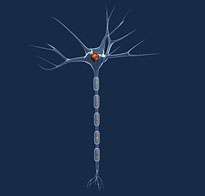
The new study focuses on dopaminergic neurons – brain cells which produce and use the chemical dopamine to communicate with surrounding neurons. The researchers found that these important neurons are created when a particular type of cell in the embryonic brain divides during the early stages of brain development in the womb.
If a person suffers from Parkinson’s disease, it is the depletion of these dopaminergic neurons and the associated lack of dopamine in the body which causes chronic and progressive symptoms including tremors, stiff muscles and slow movement.
The international research team used mouse models in the laboratory to examine the early stages of brain formation. They discovered that dopaminergic neurons are formed by precursor cells identified as ‘radial glia-like cells’ by the scientists because of their similarity to radial glia cells which are already known to build other parts of the brain.
The scientists hope that this discovery could, in the future, lead to new therapies which would use these radial glia-like cells derived from patients’ own stem cells to grow replacement neurons in the lab, which could then be transplanted into the brain to replace the neurons they have lost.
One of the authors of the paper, Dr Anita Hall from Imperial College London’s Department of Life Sciences, explains the potential of the team’s findings: “You could call these radial glia-like cells the stem cells of this part of the brain – they contain all the information needed to create and support the young dopamine-producing neurons which are essential for important human functions including motor activity, cognition and some behaviours.
“Now that we understand how these neurons are produced, we hope that this knowledge can be used to develop novel therapies including techniques to create replacement neurons for people with Parkinson’s which could be implanted into the brain to bolster their vital supplies of dopamine.”
Dr Hall adds, however, that more research is needed to work out how exactly these glia-like cells could be used: “Using these mother cells to grow new neurons in the lab which are fit to be transplanted into humans will be complicated, and extensive further research is needed before this becomes a clinical reality. For example, we’re not yet sure whether the mother cells themselves would need to be transplanted too, in order to facilitate successful dopamine production in the brain of a Parkinson’s patient,” she said.
In the UK, one in every 500 people – approximately 120,000 individuals – has Parkinson’s disease. Around 10,000 people are diagnosed with the disease every year. The symptoms of Parkinson’s disease usually appear when about 80% of the brain’s dopamine has been lost. The level of dopamine in the brain then continues to fall slowly over many years. The reasons why the loss of dopamine occurs in the brains of people with Parkinson’s is currently unknown.
Source: Imperial College London


