The future of solar-powered houses is clear
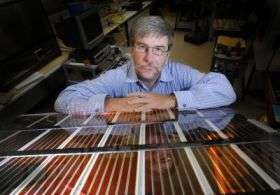
The future of solar-powered houses is clear. People could live in glass houses and look at the world through rose-tinted windows while reducing their carbon emissions by 50 percent thanks to QUT Institute of Sustainable Resources research.
Professor John Bell said QUT had worked with a Canberra-based company Dyesol, which is developing transparent solar cells that act as both windows and energy generators in houses or commercial buildings.
He said the solar cell glass would make a significant difference to home and building owners’ energy costs and could in fact generate excess energy that could be stored on onsold.
Professor Bell said the glass was one of a number of practical technologies that would help combat global warming which was a focus of research at the ISR.
“The transparent solar cells have a faint reddish hue but are completely see-through,” Professor Bell said.
“The solar cells contain titanium dioxide coated in a dye that increases light absorption.
“The glass captures solar energy which can be used to power the house but can also reduce overheating of the house, reducing the need for cooling.”
Professor Bell said it would be possible to build houses made entirely of the transparent solar cells.
“As long as a house is designed throughout for energy efficiency, with low-energy appliances it is conceivable it could be self-sustaining in its power requirements using the solar-cell glass,” he said.
“Australian housing design tends to encourage high energy use because electricity is so cheap.
“But it is easy to build a house that doesn’t need powered cooling or heating in Queensland.”
Professor Bell said the solar cell glass was the subject of two Australian Research Council Linkage grants to QUT researchers to investigate ways to increase its energy absorption and to reduce the effects of “shadowing”, where overcast skies and shadwos from trees or other buildings can cause loss of collected power.
He said the glass would be on the market a few years.
Source: Queensland University of Technology


