ESA to recruit new European astronauts
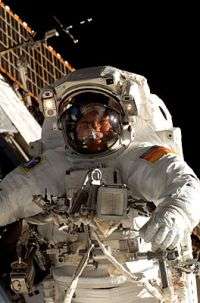
With ESA astronauts working in the Columbus laboratory onboard the International Space Station (ISS) and the first of ESA’s new ATV cargo ships having delivered fresh supplies to the station, ESA’s human spaceflight activities have entered a new era. It is now time for ESA to seek out new talent to bolster its Astronaut Corps for future manned missions to the ISS, the Moon and beyond.
The European Space Agency entered the annals of human spaceflight for the first time in 1978 with its first astronaut selection, followed in 1983 by the first Spacelab mission. Preparations for ESA’s Columbus laboratory project, meanwhile, involved a second selection of astronauts in 1992.
The overall selection process will start on Monday 19 May and follow a by now well-established procedure:
1. Screening: the first step in the formal application will be online at www.esa.int/astronautselection . Applicants will have to provide the same medical examination certificate as private pilots, the examination for which must be conducted by an Aviation Medical Examiner certified by his/her national aviation medical authority.
2. Two stages of psychological and professional aptitude evaluation, including behavioural and cognitive skills tests.
3. Medical evaluation: this process includes clinical examination by aero- medical physicians and clinical specialists, laboratory screening tests, and special procedures.
4. Formal interview: as potential ESA staff members, the astronaut candidates will go before an ESA selection board for further professional assessment.
The final appointments will be officially announced in 2009.
The selected candidates will then join the European Astronaut Corps and begin basic training at the European Astronaut Centre (ESA-EAC) in Cologne, Germany.
“We want to find high-calibre men and women in Europe to prepare to meet the challenges of ISS exploitation and human exploration of our solar system in the 21st century. As of May 2008, ESA will be searching in each of its 17 Member States for the best candidates to make this vision a reality,” says Michel Tognini, former astronaut and Head of the European Astronaut Centre.
ISS and beyond
ESA is readying its teams to take part in the human spaceflight missions of the 21st century. The solar system is the next objective for human exploration, and the world's great industrial powers are taking steps to prepare for this vast undertaking. Possessing an operational astronaut corps is an essential strategic asset if Europe is to take part in this endeavour.
“Europe has long been involved in exploration, even before the days of Christopher Columbus,“ said Daniel Sacotte, ESA’s Director of Human Spaceflight, Microgravity and Exploration. “After exploring the Earth, space is the logical next step - and a new generation of explorers are needed to follow their illustrious predecessor Columbus and embark for those new worlds. I am therefore very pleased that at the beginning of 2009, we will be welcoming a new intake of men and women to the European Astronaut Corps to undertake missions to the ISS and beyond.”
ESA needs to regenerate the European Astronaut Corps, increasing its size in order to successfully accomplish its present and future programmes. The Agency has therefore decided to initiate this process of selecting new astronauts. Candidates from all 17 Member States (Austria, Belgium, Denmark, Finland, France, Germany, Greece, Ireland, Italy, Luxembourg, the Netherlands, Norway, Portugal, Spain, Sweden, Switzerland and the United Kingdom) are welcome to apply.
“The ideal European astronaut candidate should be competent in relevant scientific disciplines, including but not restricted to life sciences, physics, chemistry and medicine and/or be an engineer or pilot, and should have demonstrated outstanding abilities in research, applications or the educational field, preferably including operational skills. In addition, characteristics expected of all applicants include a good memory and reasoning ability, concentration, aptitude for spatial orientation, and manual dexterity,” explained Gerhard Thiele, former astronaut and Head of the European Astronaut Division. Applicants should be fluent in English (Russian is also an asset) and should exhibit personality traits such as high motivation, flexibility, team competence, empathy with others and emotional stability.
Source: ESA


