Life in the FastLane: Economist finds E-ZPass program hides tax hikes
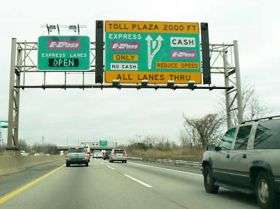
Eighteen months of road trips between Boston and New York and one Eureka moment inspired MIT economist Amy Finkelstein to study the hidden cost of E-ZPass, the popular electronic toll collection system that eliminates the frustration of manual tolls.
What she unearthed is that the handy E-ZPass program hides tax hikes in plain sight--right on the windshield transponder that's electronically "read" in E-Z lanes throughout 12 states.
In a landmark 2007 paper, "E-ZTax: Tax Salience and Tax Rates," Finkelstein reported that when toll authorities implement electronic toll collection systems like E-ZPass, toll rates begin to creep up more than they would have under the old manual toll system.
Drivers appear to be much less aware of toll rates when they pay tolls electronically, which makes it politically easier to raise tolls. As a result, she estimates that--after the new system is phased in--toll rates are 20 to 40 percent higher on roads and bridges that offer electronic toll collection than they would be if all drivers still paid tolls by cash.
Back in 2003, Finkelstein and her then-fiance led the E-ZPass life. Boston residents, they planned to marry in New York, and drove back and forth between the two cities throughout their 18-month engagement.
But the pair weren't ordinary travelers; they were both economists. Data collecting for them is like Sudoku puzzles for commuters.
"To pass the time, we tried to calculate our mileage, our gas, depreciation on the car--all the data we could find to calculate the cost of these trips," says Finkelstein, PhD '01, a specialist in health economics.
The pair knew their salient, or visible, costs. They knew their personal trip record--3 hours and 20 minutes. They knew how long they relied on a 1991 Honda Civic (until 2004) and when they bought the second Civic.
"But we didn't know how much we'd paid in tolls," Finkelstein says. "We had E-ZPass. We drove right through the toll plazas and had no idea how much we paid."
The data gap bothered Finkelstein. Then, in fall 2005, she joined the MIT faculty as an assistant professor in the Department of Economics. A conversation with Jim Poterba, economics department head and Mitsui Professor, Public Finance & Corporate Finance (as well as her former thesis adviser), ignited her Eureka moment and launched the E-ZPass project.
"I asked Jim about his experience on the President's Tax Reform Panel. And he said many people were concerned that tax reforms that made taxes less visible would make it easier for the government to raise tax rates. But he couldn't find any empirical evidence to back up this hunch."
The moment was music to Finkelstein's ears, she says. "I remembered all those trips and how we weren't aware of the toll rates. And I thought it would be fun to see if in fact toll rates went up when roads put electronic toll collection into operation."
Finkelstein's research included collecting records back to 1950 for 123 bridges, tunnels and roads throughout the United States and comparing their manual and electronic collection toll rates. "I love to track down data," she says.
The data she found show that electronic tolls end up at 20 to 40 percent higher than manual tolls within 10 years of being installed.
Finkelstein's paper also shows how electronic toll collection permits E-ZHide tax hikes.
Under manual collection, toll increases are smaller during election years; their unpopularity incurs political costs. "However, toll setting is significantly less sensitive to the election cycle under electronic toll collection," she writes.
MIT researchers, no matter how inspired, always seek excellence. A colleague asked, how do we know people who pay the tolls electronically really are less aware of tolls than those who pay with cash? So Finkelstein dug for more data.
Now married and seven months pregnant, Finkelstein hit the road again, accompanied by student researchers. They picked Exit 8 off the Mass Pike, the one leading to Brimfield's famed antiques fair, as likely to be rich in E-ZPass drivers.
"I walked around and asked people, 'When you got off the highway, how much did you pay in tolls?'" Finkelstein says. "And almost everyone replied, 'No idea--I used E-ZPass.'"
Source: MIT


