World's shortest single photon pulse created
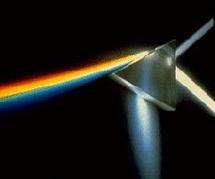
April 10, 2008 A light beam split through a prism

A light beam split through a prism

The world’s shortest light pulse containing just one photon has been produced by Oxford University scientists.

The Oxford team can create individual photons that are 65 femtoseconds in duration: that’s approximately fifty times shorter than any single photon previously produced.

And every photon this source produces is identical to the previous one. Such photons could be a major breakthrough in quantum computing: the harnessing of quantum effects to perform calculations that would take conventional computers thousands of years to resolve.

‘Creating single photons even under controlled conditions is extremely challenging,’ said Peter Mosley of Oxford’s Department of Physics. ‘Even the purest laser light beam consists of many photons all bunched together. Our approach enables us to generate individual photon replicas, identical packets of light of very short duration that are ideal for quantum computing.’

Peter Mosley, a member of Oxford’s Ultrafast Group, is a co-author of a report of the research in this week’s Physical Review Letters.

Source: Oxford University


print this article email this article download pdf blog this article bookmark this article     Stumble it Digg this share on Facebook retweet share on Reddit add to delicious
Rate this story - 4.8 /5 (18 votes)

Rank Filter

Move the slider to adjust rank threshold, so that you can hide some of the comments.


Display comments: newest first

  • agg - Apr 10, 2008
    • Rank: 4 / 5 (1)
    I wonder if they have any idea what the
    momentum of the photon is.
  • Star_Gazer - Apr 10, 2008
    • Rank: 4 / 5 (1)
    I can't wait for true multi-quibits computing!

April 10, 2008 all stories

Comments: 2

4.8 /5 (18 votes)
  • Stumble this up

  • Digg this

  • share this

  • hide
  • Related Stories

  • Science Begins at the World's Most Powerful X-ray Laser (w/ Video)
    created Nov 02, 2009 | popularity not rated yet | comments 0
  • Creating a six-qubit cluster state
    created Nov 02, 2009 | popularity not rated yet | comments 0
  • Scientists discover quantum fingerprints of chaos
    created Oct 07, 2009 | popularity not rated yet | comments 0
  • Building a better qubit: Combining 6 photons together results in highly robust qubits
    created Oct 05, 2009 | popularity not rated yet | comments 0
  • Physicists Investigate Unusual Four-Qubit Entanglement
    created Sep 30, 2009 | popularity not rated yet | comments 0


  • hide
  • Relevant PhysicsForums posts

  • Hydrostatic pressure
    created 2 hours ago
  • How are bubbles created?
    created 2 hours ago
  • quick question: how does air friction work?/why do things float
    created 3 hours ago
  • What is principle of equivalence?
    created 5 hours ago
  • More from Physics Forums - General Physics

Other News

Stars Fueled by Dark Matter Could Hold Secrets to the Universe

Stars Fueled by Dark Matter Could Hold Secrets to the Universe

Physics / General Physics

created Nov 03, 2009 | popularity 4.5 / 5 (50) | comments 41

(PhysOrg.com) -- The first stars in the universe may have been very different from the stars we see today, yet they may hold clues to understanding some of the mysterious features of the universe. These "dark ...


Second Law of Thermodynamics May Explain Economic Evolution

Second Law of Thermodynamics May Explain Economic Evolution

Physics / General Physics

created Nov 02, 2009 | popularity 4.3 / 5 (30) | comments 28

(PhysOrg.com) -- Terms such as the "invisible hand," laissez-faire policy, and free-market principles suggest that economic growth and decline in capitalist societies seem to be somehow self-regulated. Now, ...


High-performance plasmas may make reliable, efficient fusion power a reality

High-performance plasmas may make reliable, efficient fusion power a reality

Physics / Plasma Physics

created Nov 02, 2009 | popularity 4.7 / 5 (39) | comments 31

In the quest to produce nuclear fusion energy, researchers from the DIII-D National Fusion Facility have recently confirmed long-standing theoretical predictions that performance, efficiency and reliability ...


'Teapot effect' solved

Solving Teapot Effect

Physics / General Physics

created Nov 02, 2009 | popularity 4.9 / 5 (11) | comments 10

(PhysOrg.com) -- A team of scientists from France have worked out why teapots dribble at low flow rates, and how to stop them. The effect is called the "teapot effect", and solving it could finally put an ...


Laser accelerated protons to the highest energies so far

Researchers use trident laser to accelerate protons to record energies

Physics / General Physics

created Nov 02, 2009 | popularity 4.7 / 5 (6) | comments 10

An international team of physicists at Los Alamos National Laboratory has succeeded in using intense laser light to accelerate protons to energies never before achieved. Using this technique, scientists can ...