More clues to midlife dementia that erases personality
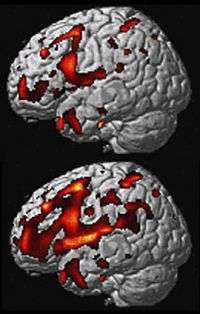
New clues have been uncovered by University of California, Berkeley, and UC San Francisco researchers to a mystifying, hidden dementia that robs its victims of empathy and social skills, and leads to an early death.
This is the first in-depth study of emotional processing in patients with frontotemporal lobar degeneration (FTLD), a neurogenerative disorder that often surfaces in middle age. Researchers from UC Berkeley and UCSF's Memory and Aging Center said FTLD is easy to overlook because it goes after the parts of the brain that control emotions while sparing functions such as memory, calculation and navigation.
FTLD patients are typically clueless about their pathology: "In their mind, nothing has really changed," said UC Berkeley psychologist Robert Levenson, who directs the project in collaboration with UCSF behavioral neurologist Bruce Miller.
As researchers learn more about FTLD through MRI scans of patients' brains, Levenson said they will be better able to pinpoint the brain circuits responsible for certain emotions and promote awareness of what is a devastating and still misunderstood disease.
FTLD is particularly hard on families. "When your loved one becomes cold and unfeeling, your first reaction is to get angry, and the relationship suffers," Levenson said. "If you understand that these changes result from a brain disease, you are likely to have a different reaction and be more supportive."
Levenson and Miller published an overview of their findings in the December 2007 issue of the journal Current Directions in Psychological Science after conducting intensive laboratory studies of FTLD patients that included brain scans, precise tests of emotional functioning, and interviews. While study participants reacted normally to very simple emotional stimuli, they lacked complex emotions such as embarrassment or compassion, and they had difficulty recognizing emotions in others.
"Embarrassment is an emotion that lets us know we have violated social norms and motivates us to take corrective actions. Without emotions such as embarrassment, we behave very inappropriately in social situations," Levenson said.
Compared to Alzheimer's disease, which is marked by dramatic memory loss and typically occurs in old age, frontotemporal dementia usually shows up before age 65 and is commonly mistaken for depression and other psychiatric disorders. At present, there is no effective treatment for FTLD.
FTLD affects as many as 15 percent of dementia sufferers, according to Levenson. The average time from diagnosis to death is five years. While it is unknown at what age FTLD actually begins, the symptoms usually appear in a person's 50s. Triggering the death of brain cells are proteins, such as tau, that accumulate in the neurons of the central nervous system. They particularly build up in the frontal and temporal lobes and literally smother the brain cells to death.
FTLD is also known as Pick's disease, and is named after Arnold Pick, a professor of psychiatry at the University of Prague who published a description of the disease in 1892. In examining the brain tissue of cadavers with a history of dementia, Pick identified abnormal cells, now known as Pick's bodies. The disorder is commonly confused with Alzheimer's disease, as some symptoms overlap. However, as researchers have found, FTLD is unique in that it targets the parts of the brain that control emotions and language and causes dramatic personality changes.
While Alzheimer's is a "slow journey into darkness, with family members continuing to catch glimpses of the person they knew and loved along the way, FTLD progresses much more rapidly, quickly erasing the person once known," the researchers write in the journal article. "The new person who emerges can still remember, calculate, navigate and conduct many of the activities of normal life, making the disease seem even more cruel."
On a positive note, Levenson said the team will continue to work on solving the riddles of FTLD and developing methods for early diagnosis in anticipation that treatment will one day become available. For information on how to be tested for FTLD, contact the UCSF Memory and Aging Center at (415) 476-6880.
"This is an investment in the future," he said. "We have every reason to expect that there will eventually be treatments that will slow or halt this process of degeneration."
Source: UC Berkeley


