MIT prof Edward Lorenz, father of chaos theory, dies at 90
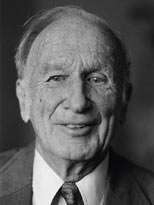
Edward Lorenz, an MIT meteorologist who tried to explain why it is so hard to make good weather forecasts and wound up unleashing a scientific revolution called chaos theory, died April 16 of cancer at his home in Cambridge. He was 90.
A professor at MIT, Lorenz was the first to recognize what is now called chaotic behavior in the mathematical modeling of weather systems. In the early 1960s, Lorenz realized that small differences in a dynamic system such as the atmosphere--or a model of the atmosphere--could trigger vast and often unsuspected results.
These observations ultimately led him to formulate what became known as the butterfly effect--a term that grew out of an academic paper he presented in 1972 entitled: "Predictability: Does the Flap of a Butterfly's Wings in Brazil Set Off a Tornado in Texas?"
Lorenz's early insights marked the beginning of a new field of study that impacted not just the field of mathematics but virtually every branch of science--biological, physical and social. In meteorology, it led to the conclusion that it may be fundamentally impossible to predict weather beyond two or three weeks with a reasonable degree of accuracy.
Some scientists have since asserted that the 20th century will be remembered for three scientific revolutions--relativity, quantum mechanics and chaos.
"By showing that certain deterministic systems have formal predictability limits, Ed put the last nail in the coffin of the Cartesian universe and fomented what some have called the third scientific revolution of the 20th century, following on the heels of relativity and quantum physics," said Kerry Emanuel professor of atmospheric science at MIT. "He was also a perfect gentleman, and through his intelligence, integrity and humility set a very high standard for his and succeeding generations."
Born in 1917 in West Hartford, Conn., Lorenz received an AB in mathematics from Dartmouth College in 1938, an AM in mathematics from Harvard University in 1940, an SM in meteorology from MIT in 1943 and an ScD in meteorology from MIT in 1948. It was while serving as a weather forecaster for the U.S. Army Air Corps in World War II that he decided to do graduate work in meteorology at MIT.
"As a boy I was always interested in doing things with numbers, and was also fascinated by changes in the weather," Lorenz wrote in an autobiographical sketch.
Lorenz was a member of the staff of what was then MIT's Department of Meteorology from 1948 to 1955, when he was appointed to the faculty as an assistant professor. He was promoted to professor in 1962 and was head of the department from 1977 to 1981. He became an emeritus professor in 1987.
Lorenz, who was elected to the National Academy of Sciences in 1975, won numerous awards, honors and honorary degrees. In 1983, he and former MIT Professor Henry M. Stommel were jointly awarded the $50,000 Crafoord Prize by the Royal Swedish Academy of Sciences, a prize established to recognize fields not eligible for Nobel Prizes.
In 1991, he was awarded the Kyoto Prize for basic sciences in the field of earth and planetary sciences. Lorenz was cited by the Kyoto Prize committee for establishing "the theoretical basis of weather and climate predictability, as well as the basis for computer-aided atmospheric physics and meteorology." The committee added that Lorenz "made his boldest scientific achievement in discovering 'deterministic chaos,' a principle which has profoundly influenced a wide range of basic sciences and brought about one of the most dramatic changes in mankind's view of nature since Sir Isaac Newton."
During leaves of absence from MIT, he held research or teaching positions at the Lowell Observatory in Flagstaff, Ariz.; the Department of Meteorology at the University of California at Los Angeles; the Det Norske Meteorologiske Insitutt in Oslo, Norway; and the National Center for Atmospheric Research in Boulder, Colo.
An avid hiker and cross-country skier, Lorenz was active up until about two weeks before his death, his family said.
Lorenz is survived by three children, Nancy, Edward and Cheryl, and four grandchildren.
A memorial service will be held at 3 p.m. Sunday, April 20, at the Swedenborg Chapel, 50 Quincy St., Cambridge. The MIT News Office will update this announcement as more details become available.
Source: MIT


