First draft of transgenic papaya genome yields many fruits
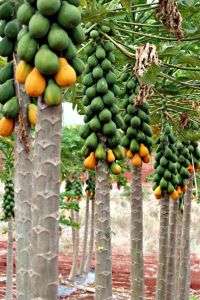
A broad collaboration of research institutions in the U.S. and China has produced a first draft of the papaya genome. This draft, which spells out more than 90 percent of the plant’s gene coding sequence, sheds new light on the evolution of flowering plants. And because it involves a genetically modified plant, the newly sequenced papaya genome offers the most detailed picture yet of the genetic changes that make the plant resistant to the papaya ringspot virus. The findings appear as the cover article in the journal Nature.
Papaya is now the fifth angiosperm (flowering plant) for which detailed genome information is available. The others are Arabidopsis (a well-studied member of the mustard family that includes species such as cabbage and radish), rice, poplar and grape.
“One of the implications of this study is, on a larger scale, to understand the genome evolution of angiosperms,” said Ray Ming, a University of Illinois professor of plant biology and co-lead author on the study.
The new findings indicate that the papaya genome took a different evolutionary path after its divergence from that of Arabidopsis about 72 million years ago, Ming said. Arabidopsis underwent two duplications of its entire genome in its recent evolutionary past, he said. These duplications, called alpha and beta, are not shared by papaya or grape. A much earlier triplication of the genome, called gamma, that is estimated to have occurred some 120 million years ago, is shared by all four eudicot plants – Arabidopsis, poplar, grape and papaya – for which genome sequences are available.
Papaya is one of the most nutritious fruits known. Its melon-like flesh is high in provitamin A, vitamin C, flavonoids, folate, pantothenic acid, potassium, magnesium and fiber.
The papaya plant also produces papain, a digestive enzyme that is used in brewing, meat tenderizing, and in some cosmetics and pharmaceutical products. Today it is cultivated in tropical and subtropical regions of the world. Global trade in papaya averaged $113 million (US) in 1998-2003.
The new analysis revealed that papaya has fewer functional genes than any other flowering plant for which genome sequence is available. Its allotment of genes for key enzymes also differs significantly from its counterparts. Papaya contains more genes for enzymes involved in cell-wall expansion and starch production than Arabidopsis does. Papaya also contains more genes for volatile compounds, the odors that attract pollinators and animals that eat the fruit and disperse its seeds.
The number of genes dedicated to lignin synthesis in papaya is intermediate between that of poplar, which contains more such genes, and Arabidopsis, which has fewer. This makes sense, Ming said, because papaya is evolving from an herbaceous plant into a woody tree.
Papaya was introduced to Hawaii in the 1800s, and the production of papaya in Hawaii grew into a major industry. That industry faced a crisis in 1992, however, when the papaya ringspot virus (PRSV) was first identified in Puna, the center of Hawaiian papaya production.
PRSV affects papaya production throughout the world. The virus interferes with the plant’s ability to photosynthesize. Affected plants are stunted and often produce deformed and inedible fruit. Papaya production in Hawaii dropped from 55.8 million pounds to 35.6 million pounds between 1992 and 1998 as a result of the virus.
Using a technique developed in 1986 that involved randomly inserting a viral coat protein gene into a plant to give the plant immunity to the virus, in the early 1990s scientists at Cornell and the University of Hawaii (led by Dennis Gonsalves, who is now director of the USDA’s U.S. Pacific Basin Agricultural Research Center) developed a transgenic papaya that was resistant to PRSV. The new study has found that the transgenic insertions occurred in only three places in the papaya genome, and that no nuclear genes were disrupted.
Having detailed information about the location of insertions in the transgenic papaya plants will aid the deregulation process in places such as Japan, where so far import of transgenic papaya plants is not allowed.
Source: University of Illinois at Urbana-Champaign


