Simulating surgery to reduce implant complications
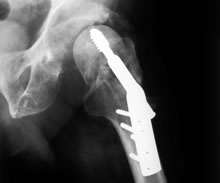
A computer simulation breakthrough could mean fewer medical complications and better surgical outcomes for patients undergoing hip, knee or spinal implant surgery.
Each year surgeons across Europe perform a staggering 900,000 hip, knee and spinal implant operations. Implant surgery is one of the most remarkable advances in medical science. Such operations restore increased mobility and a vastly improved quality of life to millions of Europeans.
Implant surgery also has one of the most remarkable success rates in medical practice, with reliable, predictable outcomes and very few complications. But it is not complication free.
“About 10 per cent of operations have complications, often requiring a new implant, or a further surgery,” explains Dr. Ing. Ruben Lafuente, technical manager of the Spanish IT consulting firm Adapting S.L. and co-ordinator of the OrthoSim project. “It means increased pain and inconvenience, a drain on human resources and of course it is expensive, too.”
Enter the EU-funded OrthoSim project. Set up to develop an orthopaedic surgery planning tool, OrthoSim has developed a platform that can significantly reduce the risk of post-op complications, as well as provide a means for testing new implant devices, the researchers claim. And in the very near future the platform will provide the base for a new surgical training tool.
Simulating the interface
The OrthoSim platform is a system using computer software to create anatomical and implant simulations. The simulation models are based on the work of two leading European biomechanics research centres.
“Our lumbar spinal region model is the result of over 20 years of research at the Laboratoire de Biomecanique of L’Ecole Nationale Superieure d’Arts et Metiers in Paris,” explains Lafuente. “It was enhanced and complemented by a lumbar implant model provided by the Instituto de Biomecánica de Valencia in Spain.”
These models were combined to provide a reliable simulation of the interface between the artificial implant and the living tissue, providing surgeons with vital pre-op information.
“With this service, a surgeon or implant engineer can effectively call on the expertise of the best people in any field of orthopaedic surgery, where biomechanical simulation can offer new insights for patient care,” Lafuente says.
Even better, the tool can be used to study the suitability of new implant devices and can help pinpoint any problems with the design at an early stage.
“Implant designers get the opportunity to test their new designs initially without the need for actual implantations,” notes Lafuente. “It will mean better implant designs at an early stage, cutting costs and research time, as well as improving outcomes early on.”
Solving the integration problem
The models are linked together and are hosted at an online service. Integrating the various models and algorithms into a unified platform was a difficult computer science problem to solve.
“We had to work very hard to get the protocols right and we spent a lot of time developing the user interface, too,” says Lafuente. “We wanted to make the service as simple to use as possible.”
The OrthoSim project ended in March last year, with the research team successfully combining the various elements of the project. Since then the partners have been developing the service offering further and are looking for financial support.
“Initially we had a model just for lumbar spine implants, but in the last months we have almost completed a validated model for hip implants,” says Lafuente. “We believe that once we finish perfecting a model for knee implants we will have a very strong set of tools to offer surgeons.”
But Lafuente warns that developing new products for the health market is a very difficult task in itself.
“The quality assurance and validation issues are very important in healthcare directed products, and will require more work,” he says.
That work continues. A follow-on project, called OrthoTraining, is taking the OrthoSim toolset a step further. Over the next two years OrthoTraining’s researchers plan to develop a surgical training tool based on OrthoSim’s work.
“It will enhance training for students and it will mean that newly qualified surgeons will have better training and an enhanced skill set,” Lafuente says. “This will improve the medical services and quality of life of European citizens.”
OrthoSim was funded under the EU's eTEN programme for market validation and implementation.
Source: ICT Results


