What horses can tell us now about the coming human flu pandemic
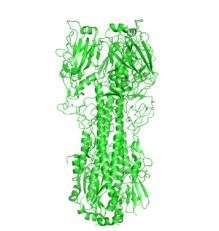
Stored safely in a freezer at Cornell's James A. Baker Institute for Animal Health are samples of the virus thought to be most like the one public health experts expect someday to afflict record numbers of the world's population. The virus was collected in 1973 during an outbreak of equine influenza at a Florida racetrack. Dorothy Holmes, an infectious disease specialist in Cornell's College of Veterinary Medicine, had obtained samples of the virus with the intention of using it to create nasal spray vaccines for horses.
Now, 35 years later, Cornell scientists have the rare chance to study the behavior of the organism to figure out why this particular virus, an H7 serotype, outperforms all other serotypes in its lethal powers. The study is supported by a seven-year, $3 million award from the National Institutes of Health.
"Influenza H7 is unique in its capability to invade not only the lungs but other parts of the host's body, including the brain, and this is why it's so dangerous," explains Gary Whittaker, an associate professor of virology who leads the project.
All the action takes place where the virus enters the host's cells. To study what goes on there, Whittaker, a specialist in the entry mechanisms of viruses, has assembled a team of experts and computational resources from across campus. They include Daniel Ripoll, a senior research associate with the Computational Biology Service Unit at Cornell, who has created a computer-generated 3-D model of the molecular structure of the H7 influenza virus coat protein (hemagglutinin or HA, for short). This is the molecule responsible for enabling the influenza virus to recognize a cell and invade it.
"With this model we can look inside the structure of the virus and make a really good prediction of what's going on," Whittaker explains. "Without it we'd be shooting completely in the dark."
In preliminary studies, funded by Harry M. Zweig Memorial Fund for Equine Research, Whittaker found a surprising stretch of amino acids, the molecules that are the building blocks of a protein (tinted pink in illustration).
"That stretch fascinates me," Whittaker says. "No other influenza ever in any species has this sequence apart from equine H7 virus."
It's the exposure of this sequence that Whittaker believes controls the virus's ability to invade the tissues of many regions of the body rather than just the lungs, as do the currently circulating equine influenza (H3) and human influenza (H1 and H3).
Structural biologist and co-investigator Brian Crane, an associate professor of chemistry and chemical biology, is focusing on the static structure of HA. It is known that when viruses enter cells they undergo a change in their structure. Collaborator Lois Pollack, an associate professor of applied and engineering physics, is interested in the dynamics of this change -- how the protein undergoes a change in shape and structure when entering the cell. Susan Daniel, an assistant professor of chemical and biomolecular engineering and an expert in using solid-supported lipid bilayers as mimics of cell membranes, is looking at what happens next, when the virus enters the host's cell and contacts the plasma membrane of the cell (which is a lipid).
"With this highly talented group of people, we can go deeper and deeper into the mechanism of how the virus recognizes the cell and undergoes its conformational change, right through to when it fuses with the lipids," Whittaker explains.
There is another equally compelling reason to study the activity of surface proteins of the equine influenza virus.
"Mutations occurring at the entry site are very often what allow host switching; that is, the virus's ability to jump from one species to another -- say from birds to horses or from birds to people," Whittaker points out.
The H7 serotype -- the first documented equine influenza virus -- was isolated from an equine outbreak in Czechoslovakia in 1956 that spread around the world. Subsequently it was shown that the virus was a very highly pathogenic H7 virus in chickens and other birds that had moved into horses. Now H7 is prevalent in birds, a fact that gives public health officials great concern.
Whittaker thinks there's a significant probability that the characteristics of H7 (which has never been studied in any kind of molecular detail before) as it infected horses in the 1950s would be similar to the characteristics of virus behavior when the next virus pandemic occurs in horses and in humans.
"The horse," Whittaker says, "can give incredibly valuable information for our global understanding of influenza."
The investigators also plan to study the serotype of the virus that caused the 1918 flu pandemic and today's avian influenza serotypes to try to figure out what distinguishes those from flu viruses now circulating in the human population.
"We've shown that there's clearly an obvious difference between equine and avian viruses, but those between the human and avian viruses are more subtle, so we're going to have to do more work to find out what's going on there," Whittaker explains.
Source: Cornell University


