Ozone hole recovery may reshape southern hemisphere climate change
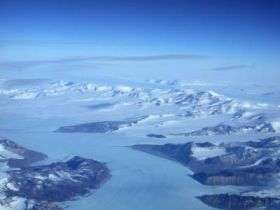
A full recovery of the stratospheric ozone hole could modify climate change in the Southern Hemisphere and even amplify Antarctic warming, according to scientists from the University of Colorado at Boulder, the National Oceanic and Atmospheric Administration and NASA.
While Earth's average surface temperatures have been increasing, the interior of Antarctica has exhibited a unique cooling trend during the austral summer and fall caused by ozone depletion, said Judith Perlwitz of the Cooperative Institute for Research in Environmental Sciences, a joint institute of CU-Boulder and NOAA. "If the successful control of ozone-depleting substances allows for a full recovery of the ozone hole over Antarctica, we may finally see the interior of Antarctica begin to warm with the rest of the world," Perlwitz said.
Perlwitz is lead author of a new study on the subject to be published April 26 in Geophysical Research Letters. Co-authors include Steven Pawson and Eric Nielson of NASA's Goddard Space Flight Center in Greenbelt, Md., and Ryan Fogt and William Neff of NOAA's Earth System Research Laboratory in Boulder. The study was supported by NASA's Modeling and Analysis Program.
The authors used a NASA supercomputer model that included interactions between the climate and stratospheric ozone chemistry to examine how changes in the ozone hole influence climate and weather near Earth's surface, said Perlwitz.
The study authors calculated that when stratospheric ozone levels return to near pre-1969 levels by the end of the 21st century, large-scale atmospheric circulation patterns now shielding the Antarctic interior from warmer air masses to the north will begin to break down during the austral summer. The circulation patterns are collectively known as a positive phase of the Southern Annular Mode, or SAM.
The scientists found that as ozone levels recover, the lower stratosphere over the polar region will absorb more harmful ultraviolet radiation from the sun. This could cause air temperatures roughly 6 to 12 miles above Earth's surface to rise by as much as 16 degrees Fahrenheit, reducing the strong north-south temperature gradient that currently favors the positive phase of SAM, said the research team.
The supercomputer modeling effort also indicated that ozone hole recovery would weaken the intense westerly winds that currently whip around Antarctica and block air masses from crossing into the continent's interior. As a result, Antarctica would no longer be isolated from the warming patterns affecting the rest of the world.
NASA's Pawson said ozone recovery over Antarctica would essentially reverse summertime climate and atmospheric circulation changes that have been caused by the presence of the ozone hole. "It appears that ozone-induced climate change occurred quickly, over 20 to 30 years, in response to the rapid onset of the ozone hole," he said. "These seasonal changes will decay more slowly than they built up, since it takes longer to cleanse the stratosphere of ozone-depleting gases than it took for them to build up."
The seasonal shift in large-scale circulation patterns could have repercussions for Australia and South America as well. Other studies have shown that the positive phase of SAM is associated with cooler temperatures over much of Australia and increased rainfall over Australia's southeast coastline.
During late spring and early summer, the positive phase of SAM also is associated with drier conditions in South America's productive agricultural areas like Argentina, Brazil, Uruguay and Paraguay, said Perlwitz. If ozone recovery induces a shift away from a positive SAM, Australia could experience warmer and drier conditions while South America could get wetter, she said.
But just how influential a full stratospheric ozone recovery will be on Southern Hemisphere climate largely depends on the future rate of greenhouse gas emissions, according to the GRL authors. Projected increases in human-emitted greenhouse gases like carbon dioxide will be the main driver for strengthening the positive phase of SAM.
"In running our model simulations, we assumed that greenhouse gases like carbon dioxide would double over the next 40 years and then slowly level off," said Perlwitz. "If human activities cause more rapid increases in greenhouse gases, or if we continue to produce these gases for a longer period of time, then the positive SAM may dominate year-round and dwarf any climatic effects caused by ozone recovery."
Source: University of Colorado at Boulder


