New nanotech products hitting the market at the rate of 3-4 per week
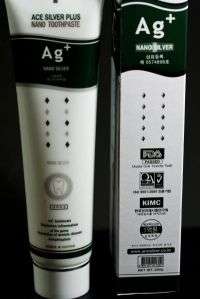
April 24, 2008 Nano Silver Toothpaste

Nano Silver Toothpaste, purchased in local market. Credit: 2008 - Alex Parlini, Project on Emerging Nanotechnologies

New nanotechnology consumer products are coming on the market at the rate of 3-4 per week, a finding based on the latest update to the nanotechnology consumer product inventory maintained by the Project on Emerging Nanotechnologies (PEN).

One of the new items among the more than 600 products now in the inventory is Swissdent Nanowhitening Toothpaste with “calcium peroxides, in the form of nano-particles.” Today, in testimony before the Senate Commerce Committee, PEN Project Director David Rejeski cited Ace Silver Plus—another of the nine nano toothpastes in the inventory—as an example of the upsurge in nanotechnology consumer products in stores. The hearing marks the start of U.S. Senate debate on the future direction of the annual $1.5 billion federal investment in nanotechnology research and development (R&D).

The number of consumer products using nanotechnology has grown from 212 to 609 since PEN launched the world’s first online inventory of manufacturer-identified nanotech goods in March 2006. Health and fitness items, which includes cosmetics and sunscreens, represent 60 percent of inventory products. The colorful and searchable list of nanotechnology merchandise—containing everything from nanotech diamonds and cooking oil, to golf clubs and iPhones—is available free at www.nanotechproject.org/consumerproducts.

There are 35 automotive products in the PEN inventory, including the Hummer H2. General Motors Corporation bills the H2 as having a cargo bed that “uses about seven pounds of molded in color nanocomposite parts for its trim, center bridge, sail panel and box rail protector.”

Nanoscale silver is the most cited nanomaterial used. It is found in 143 products or over 20 percent of the inventory. Carbon, including carbon nanotubes and fullerenes, is the second highest nanoscale material cited. Other nanoscale materials explicitly referenced in products are zinc (including zinc oxide) and titanium (including titanium dioxide), silica and gold.

While polls show most Americans know little or nothing about nanotechnology, in 2006 nanotechnology was incorporated into more than $50 billion in manufactured goods. By 2014, Lux Research estimates $2.6 trillion in manufactured goods will incorporate nanotechnology—or about 15 percent of total global output. Despite a 2006 worldwide investment of $12.4 billion in nanotech R&D, comparatively little was spent on examining nanotechnology’s potential environmental, health and safety risks.

“Public trust is the ‘dark horse’ in nanotechnology’s future,” says Rejeski in his testimony. “If government and industry do not work to build public confidence in nanotechnology, consumers may reach for the ‘No-Nano’ label in the future and investors will put their money elsewhere.”

According to Rejeski, “The use of nanotechnology in consumer products and industrial applications is growing rapidly, with the products listed in the PEN inventory showing just the tip of the iceberg. Public perceptions about risks—real and perceived—can have large economic consequences. How consumers respond to these early products—in food, electronics, health care, clothing and cars—is a litmus test for broader market acceptance of nanotechnologies in the future.”

Source: Project on Emerging Nanotechnologies


print this article email this article download pdf blog this article bookmark this article     Stumble it Digg this share on Facebook retweet share on Reddit add to delicious
Rate this story - 3.1 /5 (15 votes)

Rank Filter

Move the slider to adjust rank threshold, so that you can hide some of the comments.


Display comments: newest first

  • superhuman - Apr 28, 2008
    • Rank: not rated yet
    >calcium peroxides, in the form of nano-particles.

    Most of these "nanotechnology" products are laughable, it just so happens that almost every chemical and biological compound has molecules of nanometer or subnanometer size and can be labeled as nanoparticle, its the good old chemistry capitalizing on nanofever.

    Water, gasoline, alcohol, drugs, suger and salt in solutions are all nanoparticles! Enjoy the wonders of nanotechnology!

April 24, 2008 all stories

Comments: 1

3.1 /5 (15 votes)
  • Stumble this up

  • Digg this

  • share this

  • hide
  • Related Stories

  • Nanotech in your vitamins
    created Jan 14, 2009 | popularity not rated yet | comments 0
  • Experts argue nano food-additives require new oversight
    created Dec 18, 2008 | popularity not rated yet | comments 0
  • Nanoscale silver: No silver lining?
    created Sep 09, 2008 | popularity not rated yet | comments 0
  • Federal toxics disclosure law could help inform public of nanotechnology risks
    created Feb 26, 2008 | popularity not rated yet | comments 0
  • Nanotechnology: not just for geeks
    created Oct 02, 2007 | popularity not rated yet | comments 0


  • hide
  • Relevant PhysicsForums posts

Other News

New transparent insulating film could enable energy-efficient displays

New transparent insulating film could enable energy-efficient displays

Nanotechnology / Nanomaterials

created 1hour ago | popularity 5 / 5 (2) | comments 0

Johns Hopkins materials scientists have found a new use for a chemical compound that has traditionally been viewed as an electrical conductor, a substance that allows electricity to flow through it. By orienting ...


Ideal nanoparticle cancer therapies surf the bloodstream

Nanotechnology / Bio & Medicine

created 1hour ago | popularity 5 / 5 (1) | comments 0

Eric Shaqfeh studies blood at Stanford University, using computer models that simulate how the fluid and the cells it contains move around. On November 11 at a meeting of the scientific society AVS, he will present his latest ...


New Digital 'Electronics' Concept May Continue Moore's Law

New Digital 'Electronics' Concept May Continue Moore's Law

Nanotechnology / Nanophysics

created Nov 05, 2009 | popularity 4.6 / 5 (56) | comments 9

(PhysOrg.com) -- Computers of the future could be operating not on electrons, but on tiny waves traveling through an electron "fluid," if a new proposal is successful. The new circuit design, recently introduced ...


Findings show nanomedicine promising for treating spinal cord injuries

Findings show nanomedicine promising for treating spinal cord injuries

Nanotechnology / Bio & Medicine

created Nov 08, 2009 | popularity 4.5 / 5 (4) | comments 0

(PhysOrg.com) -- Researchers at Purdue University have discovered a new approach for repairing damaged nerve fibers in spinal cord injuries using nano-spheres that could be injected into the blood shortly ...


Nanoparticles for gene therapy improve

Nanoparticles for gene therapy improve

Nanotechnology / Bio & Medicine

created Nov 06, 2009 | popularity 5 / 5 (5) | comments 3

(PhysOrg.com) -- About five years ago, Professor Janet Sawicki at the Lankenau Institute in Pennsylvania read an article about nanoparticles developed by MIT's Robert Langer for gene therapy, the insertion ...