Chinese ants show promise for fighting arthritis, other diseases
April 28, 2008 Medicinal Ants

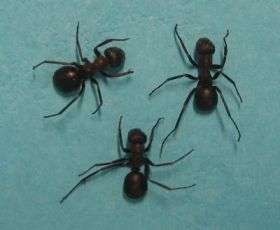
Chemists have identified substances in Chinese medicinal ants, above, that show promise for fighting arthritis, hepatitis and other diseases. Credit: Courtesy of Zhi-Hong Jiang, Hong Kong Baptist University

Ants may be an unwelcome intruder at picnics, but they could soon be a welcome guest in your medicine cabinet. Chemists in China report identification of substances in a certain species of ants that show promise for fighting arthritis, hepatitis, and other diseases. Their study is scheduled for the April 25 issue of ACS’ Journal of Natural Products.

For centuries, ants have been used as a health food or drink ingredient in China to treat a wide range of health conditions, including arthritis and hepatitis. Researchers suspect that these health effects are due to anti-inflammatory and pain-killing substances in the ants. However, the exact chemicals responsible for its alleged medicinal effects are largely unknown.

In the new study, Zhi-Hong Jiang and colleagues analyzed extracts from a particular species of Chinese medicinal ant (Polyrhacis lamellidens) commonly used in folk medicine.

The researchers identified at least two polyketides, potent natural products also found in plants, fungi and bacteria that have shown promise in studies by others for fighting arthritis, bacterial infections, and a variety of other diseases.

Source: ACS


Rate this story - 4.5 /5 (2 votes)


April 28, 2008 all stories

Comments: 0

4.5 /5 (2 votes)

  • hide
  • Related Stories

  • Biologists discover 'death stench' is a universal ancient warning signal
    created Sep 11, 2009 | popularity not rated yet | comments 0
  • When Ants Go Sweating: Zoologists to Study Climate Change Effects
    created Oct 18, 2007 | popularity not rated yet | comments 0
  • Researchers reveal the tangle under turbulence
    created Mar 28, 2007 | popularity not rated yet | comments 0
  • Scientists Confirm Folk Remedy Repels Mosquitoes
    created Jun 29, 2006 | popularity not rated yet | comments 0
  • Scientists 'grow' edible insects in Costa Rica
    created Feb 03, 2010 | popularity not rated yet | comments 0


  • hide
  • Relevant PhysicsForums posts

Other News

Depression and lack of concentration do not necessarily go together

Medicine & Health / Psychology & Psychiatry

created 4 hours ago | popularity 5 / 5 (1) | comments 0

Many clinicians believe that depression goes hand in hand with cognitive difficulties such as memory problems or difficulties concentrating and paying attention, but a recent review of nearly 20 years of literature conducted ...


boredom

Bored to death? It's possible

Medicine & Health / Psychology & Psychiatry

created 18 hours ago | popularity 3.7 / 5 (16) | comments 7 | with audio podcast report

(PhysOrg.com) -- Scientists from the University College London in the U.K. have found that living a life of boredom can kill you.


Feeling blue? You'll shun the new

Feeling blue? You'll shun the new

Medicine & Health / Psychology & Psychiatry

created 8 hours ago | popularity 5 / 5 (3) | comments 0 | with audio podcast

A sick or sad child might cling to mom's leg. But that same child - fed, rested and generally content - will happily toddle off to explore every nook and cranny of the known world. Or: You're chipper and you ...


Babies wise to what we really mean: Researchers find first evidence that six-month-olds comprehend adults' intentions

Medicine & Health / Psychology & Psychiatry

created 9 hours ago | popularity 5 / 5 (1) | comments 0 | with audio podcast

A study by York University researchers reveals that infants as young as six months old know when we're "playing" them - and they don't like it.


Early life stress may predict cardiovascular disease

Early life stress may predict cardiovascular disease

Medicine & Health / Health

created 8 hours ago | popularity not rated yet | comments 0 | with audio podcast

Early life stress could be a risk factor for cardiovascular disease in adulthood, researchers report.