Researchers unveil a new class of fatty acids
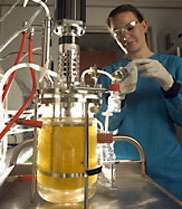
CSIRO researchers have discovered a new class of fatty acids – alpha-hydroxy polyacetylenic fatty acids – that could be used as sensors for detecting changes in temperature and mechanical stress loads.
CSIRO Entomology business manager, Cameron Begley, said researchers believed the discovery opened up an entirely new class of chemistry.
“Some of these alpha-hydroxy polyacetylenic fatty acids act as indicators for a range of different conditions, such as mechanical stress or heat, and display self-assembling properties. Others display anti-microbial properties,” he said.
“Australian scientists working within the Crop Biofactories Initiative (CBI) have also been developing applications for alpha-hydroxy unsaturated fatty acids (AHUs).
“Alpha-hydroxy fatty acids (AHA’s) are well known to industry, but we have found some interesting applications for AHUs. We have introduced them to a range of bio-based condensation polymer systems that have increased film flexibility. Using these AHUs we have also observed strong adhesion between polyolefins and a range of substrates.”
CBI researchers have also identified novel uses for hydroxy fatty acids and how these affect polymer properties.
The team will be outlining these discoveries on 28 April during the Fifth Annual World Congress on Industrial Biotechnology & Bioprocessing (WCIBB), being held in Chicago, Illinois, from 27-30 April 2008.
The CBI is a 12-year project which aims to add value to the Australian agricultural and chemical industries by developing technologies to produce novel industrial compounds from genetically modified oilseed crops. This Initiative is a joint venture between CSIRO and the Grains Research and Development Corporation.
The project focuses on three key areas; Industrial Oils, Complex Monomers and Protein Biopolymers. CBI project leaders will present the latest research findings in each of these three areas at the WCIBB in Chicago which will showcase innovation at the convergence of biotechnology, chemistry and agriculture.
Source: CSIRO


