Stem cells at root of antlers' branching
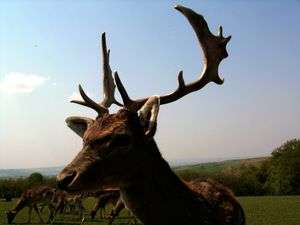
The ability to regenerate lost body parts is unevenly distributed among higher organisms. Among vertebrates, some amphibians are able to replace lost limbs completely, while mammals are unable to regenerate complex appendages. The only exception to this rule is the annual replacement of deer antlers. The annual regrowth of these structures is the only example of regeneration of a complete, anatomically complex appendage in a mammal, and antlers are therefore of high interest to regeneration biologists.
The epimorphic regeneration of appendages may involve progenitor cells created through reprogramming of differentiated cells or through the activation of resident stem cells. Reporting in this week’s PLoS ONE in a study funded by the German Research Society, Hans J. Rolf and colleagues from the University of Goettingen and University of Hildesheim (Germany) emphasize that deer antler growth and regeneration might be reduced to a stem cell-based process.
Their results strongly support the view that the growth of primary antlers as well as the annual process of antler regeneration depend on the periodic activation of mesenchymal stem cells. Understanding the mechanisms behind this unique regeneration process could have an important impact on the emerging field of regenerative medicine.
Deer antlers are cast and regenerated from permanent bony protuberances of the frontal bones, called pedicles. After antler casting, the bone wound on the top of the pedicle is bordered by the pedicle periosteum and the pedicle skin. Wound healing and epithelialization as well as formation of an antler bud occur very rapidly and, in larger species like the red deer (Cervus elaphus), the new antler elongates at an average rate of about 1 cm per day.
As early as the second half of the 20th century antler biologists recognized that exploring the mechanisms of antler regeneration may provide crucial insights to better understand why mammals are unable to regenerate amputated limbs. For years, the source of the cells that give rise to the regenerating antler has been a matter of controversy. Recently, it has been hypothesized that antler regeneration is a stem cell based process and most workers in the field consider the periosteum of the pedicle to be the source of the cells forming the regenerating antler.
However, thus far direct evidence for the existence of stem/progenitor cells in the pedicle periosteum and the growing antler was lacking. As part of an ongoing research project, Rolf and colleagues searched for the presence of cells positive for known stem/progenitor cell markers in pedicles and growing antlers of fallow deer (Dama dama). In addition, they isolated and cultivated stem/progenitor cells derived from the deer antler/pedicle and investigated their proliferation and differentiation properties.
The most important finding of the present study is the demonstration of STRO-1+ cells in different locations of the primary and regenerating antler as well as in the pedicle of fallow deer. The experiments described by Rolf and colleagues strongly support the view that the annual antler regeneration indeed represents a stem cell-based process. Their results are consistent with the hypothesis that the regenerating antler is build up by the progeny of mesenchymal stem/progenitor cells located in the cambial layer of the pedicle periosteum.
It has recently been shown that stem cell populations exist in "niches" — specific anatomical locations that regulate how the stem cells participate in tissue generation, maintenance and repair. Rolf and colleagues assume that such a "stem cell niche" is located in the cambial layer of the periosteum and that the regeneration of antlers is dependent on the periodic activation of these stem cells.
Even though different groups have recently found clues to the presence of stem cells/progenitor cells in the pedicle periosteum as well as in primary and regenerating antlers, the present paper for the first time provided crucial evidence for the existence of stem cells in these areas. It has been shown that fallow deer antler cells positive for different stem cell markers can be sorted and cultivated as “pure” cultures.
These cells were able to differentiate in vitro along the osteogenic and adipogenic lineages. Together, the findings of the present study suggest that not only limited tissue regeneration, but also extensive appendage regeneration in a postnatal mammal can occur as a stem cell-based process. Therefore, deer antlers as a research model might be of great interest not only for veterinarians or deer biologists but also for stem cell researchers, tissue engineers, cell biologists and basic researchers in medical disciplines.
Citation: Rolf HJ, Kierdorf U, Kierdorf H, Schulz J, Seymour N, et al. (2008) Localization and Characterization of STRO-1+ Cells in the Deer Pedicle and Regenerating Antler. PLoS ONE 3(4): e2064. doi:10.1371/journal.pone.0002064
Source: Public Library of Science


